
What you’re actually paying — and how to take control
⚡ The Truth Most People Miss
Your electric bill isn’t just a bill.
It’s a subscription to rising costs.
Every month you pay:
- for electricity
- for delivery
- for infrastructure
- for price increases you don’t control
📊 The Real Comparison
Let’s make it simple.
Without Solar:
- You pay every month
- Rates increase every year
- You own nothing
💸 What That Means for You
With Solar:
- You generate your own energy
- You lock in your cost
- You own the system
📈 The 2026 Reality
Electricity prices are rising faster than ever.
Driven by:
- AI and data center demand
- grid upgrades
- extreme weather
- inflation
👉 Average increases now: 6–10% per year
💸 Real Example (2026 Numbers)
Let’s break it down:
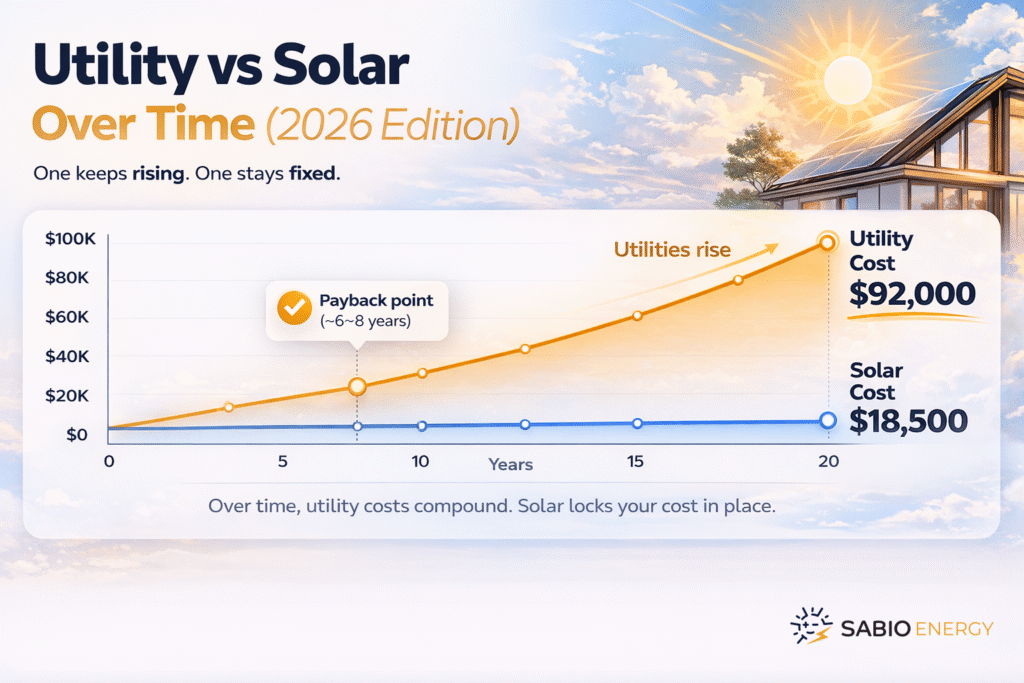
Utility Path:
- Monthly bill: $200
- Annual increase: 7%
In 20 years: 👉 You pay $95,000+
Solar Path:
- System cost (after tax credit): ~$16,000
- Monthly energy cost: near $0
In 20 years: 👉 You pay $16,000–$25,000 total
📊 Visual: Utility vs Solar Over Time
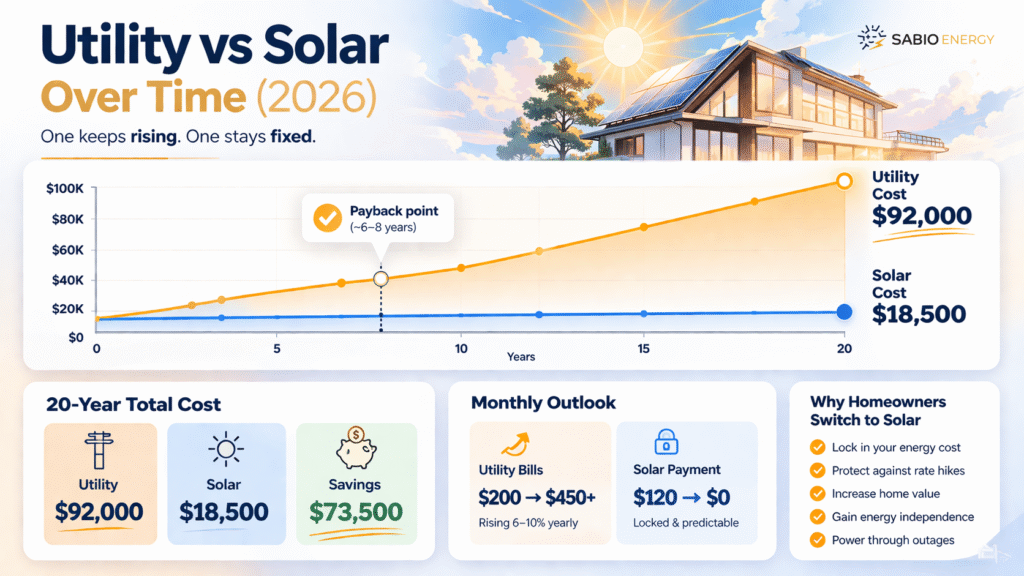
👉 One keeps rising
👉 One stays fixed
🔋 Where Batteries Change Everything
In 2026, this matters more than ever.
Without a battery:
- you still rely on the grid at night
- you’re exposed to peak pricing
With a battery:
- you store your own energy
- you avoid expensive hours
- you stay powered during outages
👉 This is control — not just savings
🧠 The Real Shift
Solar isn’t just about saving money.
It’s about: 👉 predictability in an unpredictable system
📍 How This Plays Out in Your State (2026)
California
- Extremely high rates ($0.30–$0.45+)👉 Solar + battery = almost essential
Texas
- Lower rates but unstable grid👉 Batteries = huge value
Florida
- Strong sunlight + growing demand👉 High production = strong ROI
New Jersey
- Strong incentives + high rates👉 Excellent long-term returns
Arizona
- Extreme sun exposure👉 Maximum system output
📊 2026 Solar Snapshot
- Average system: $18K–$28K
- Federal tax credit: 30%
- Payback period: 5–8 years
- Electricity inflation: 6–10% annually
❓ Frequently Asked Questions
How long does solar take to pay off in 2026?
Most systems pay for themselves in 5–8 years, depending on your state and usage.
Does solar eliminate my electric bill completely?
In many cases, yes — or it reduces it to a minimal connection fee.
Do I need a battery?
Not required, but in 2026 it significantly improves:
- savings
- independence
- reliability
What happens if I move?
Solar systems typically increase home value and make homes more attractive to buyers.
⚡ Final Thought
Utilities sell you uncertainty. Solar gives you control.