The cleanest, smartest breakdown of what’s true — and what’s noise.
Solar is exploding in popularity.
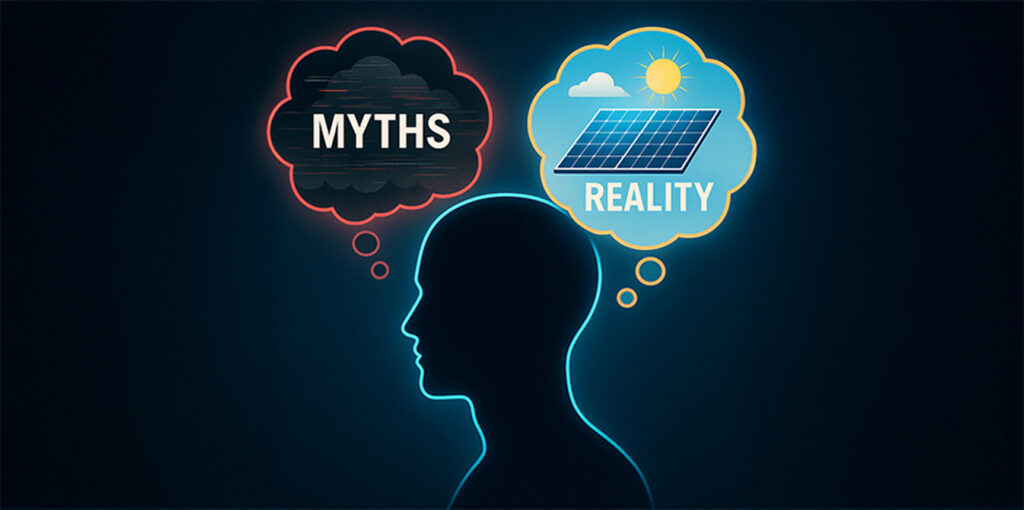
So are the myths.
Let’s wipe the slate clean with straight, data-driven clarity.
❌ Myth #1: “Solar only works in hot states.”
✔️ Reality: Solar works best in sunny, cool conditions.
Panels love sunlight — not heat.
Arizona, New Jersey, California, and even snowy states perform extremely well.
Germany — cloudy, cold — is one of the world leaders in solar output.
❌ Myth #2: “Solar won’t work during a blackout.”
✔️ Reality: Solar works during a blackout if you have a battery.
Utility rules require panels to shut off during an outage (for lineman safety).
Add a battery, and your home becomes its own protected microgrid.
❌ Myth #3: “Solar is expensive.”
✔️ Reality: Solar is the cheapest form of electricity in the U.S. (2025).
Between the 30% federal credit, state incentives, and dropping hardware prices, solar now beats:
- fossil fuels
- utility power (in almost every state)
- diesel backup generators
❌ Myth #4: “Solar panels damage your roof.”
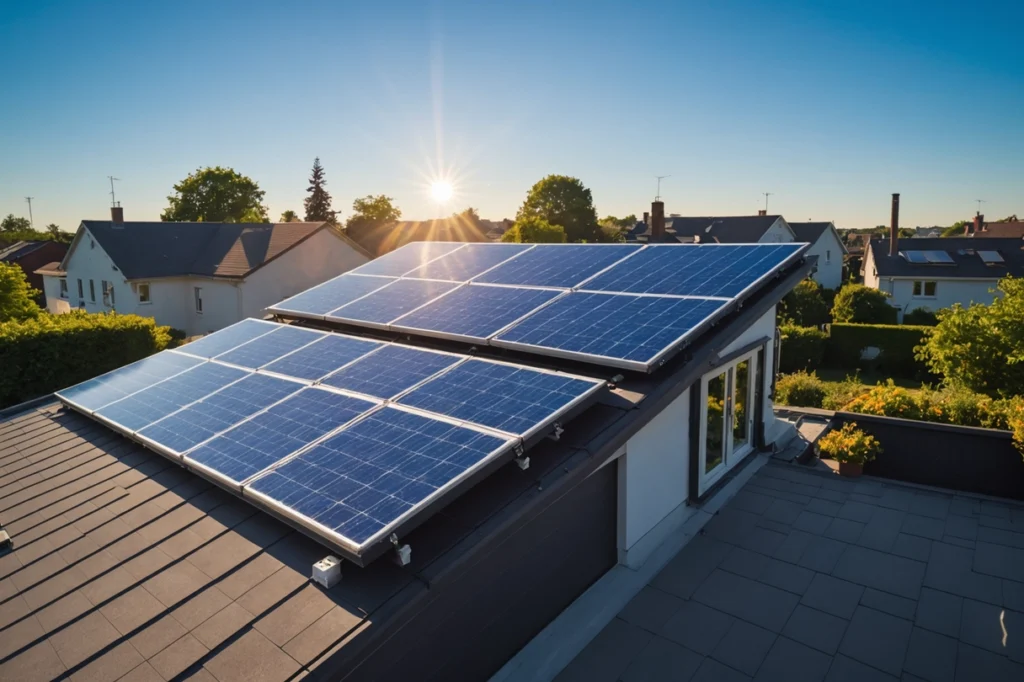
✔️ Reality: Solar panels protect your roof.
Properly installed systems:
- shield shingles from UV exposure
- reduce heat load
- extend roof life underneath the array
❌ Myth #5: “Panels need constant cleaning.”
✔️ Reality: They’re nearly maintenance-free.
Rain does most of the work.
In dusty climates, an annual rinse is enough.
❌ Myth #6: “Solar is bad in winter.”
✔️ Reality: Cold weather boosts efficiency.
Snow reflects additional sunlight (“albedo effect”), increasing output when panels clear.
🧠 Sabio Summary
Solar isn’t complicated. It’s simply better technology replacing older technology — just like the smartphone replaced flip phones.