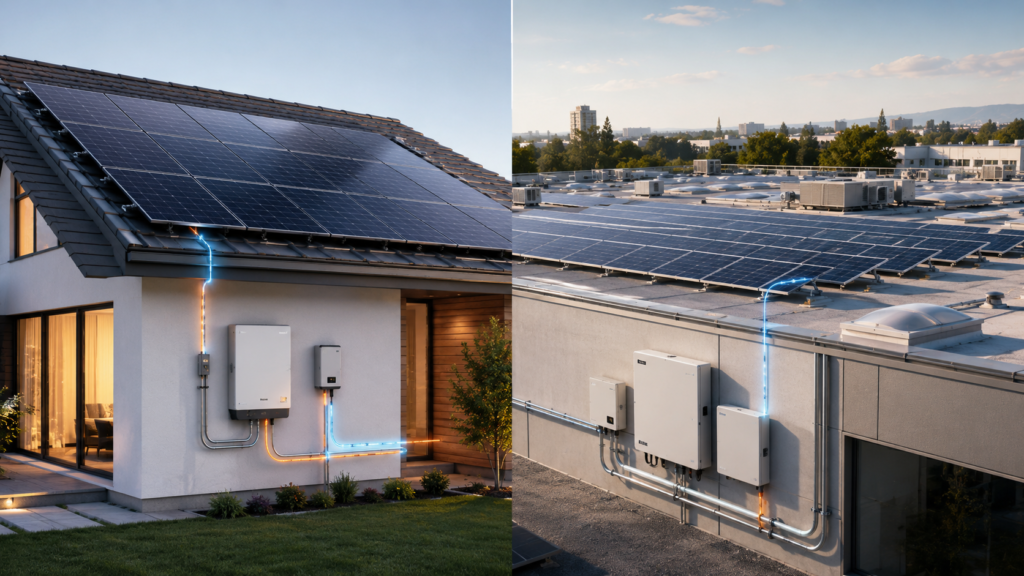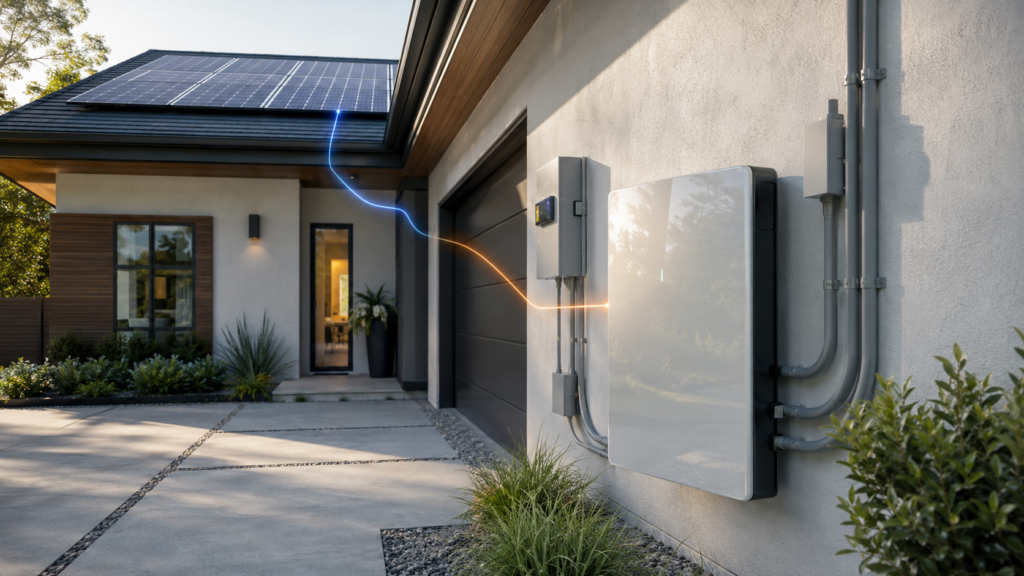
EV charging is not just about plugging in a car. It is part of your home energy plan.
Buying an electric vehicle changes how you think about energy.
Before an EV, your electric bill mostly came from things like lights, appliances, air conditioning, electronics, laundry, and kitchen use.
After an EV, your home may also become your fueling station.
That is a big shift.
Instead of going to a gas station, you may charge your car in the garage, driveway, or parking area.
That sounds simple.
But EV charging can add a major new electrical load to your home.
That is why homeowners should understand the difference between Level 1 and Level 2 EV charging before choosing a setup.
The right charger depends on your driving habits, electrical panel, solar plans, battery storage goals, budget, and how quickly you need to charge.
EV charging is not just a car decision.
It is an energy decision.
What Is Level 1 EV Charging?
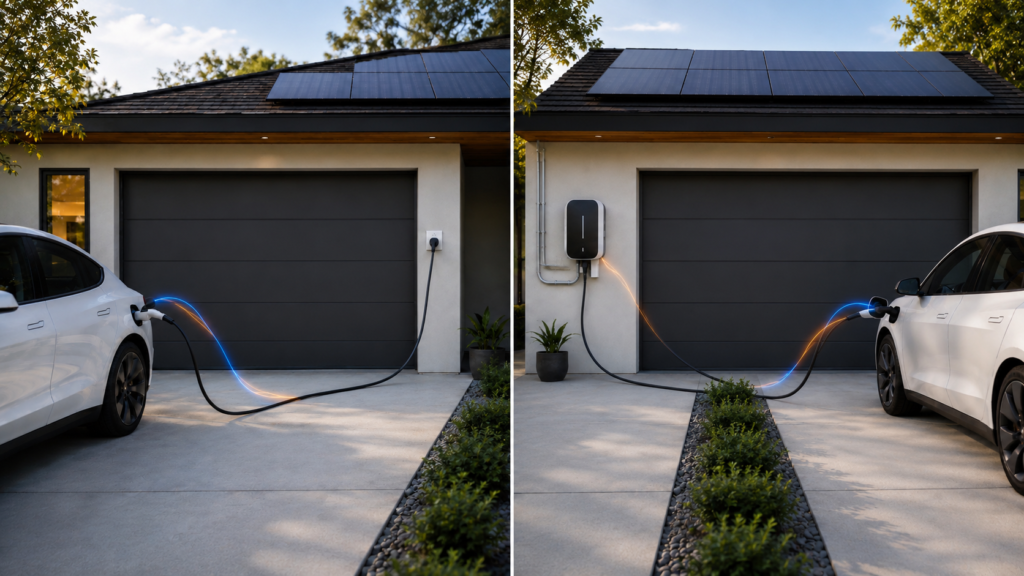
Level 1 charging uses a standard household outlet.
This is usually a regular 120-volt outlet, similar to what you use for lamps, phone chargers, TVs, and small appliances.
Many EVs come with a portable charging cord that can plug into a standard outlet.
Level 1 is the simplest way to charge.
It usually does not require a dedicated charger installation if the outlet is safe, grounded, and properly rated.
But Level 1 charging is slow.
It may work well for people who drive short distances, park at home for long periods, and do not need to recharge quickly.
A simple way to think about Level 1:
Easy to start. Slow to charge.
What Is Level 2 EV Charging?
Level 2 charging uses a higher-voltage circuit, usually 240 volts.
This is similar to the type of power used for larger appliances like electric dryers, ovens, or HVAC equipment.
A Level 2 charger usually requires a dedicated circuit and professional installation.
It charges much faster than Level 1.
For many EV owners, Level 2 charging is the more practical long-term home charging solution.
A simple way to think about Level 2:
More installation. Much faster charging.
The Biggest Difference
The biggest difference between Level 1 and Level 2 charging is speed.
Level 1 can work if you drive a limited amount each day and have plenty of time to recharge.
Level 2 is better if you want faster, more reliable home charging.
This matters because most people do not want to think about charging every day.
They want the car to be ready when they need it.
If your EV is only partially charged every morning, the convenience starts to disappear.
The right charger should match your life.
Not just your car.
Level 1 Charging Pros
Level 1 charging has some clear advantages.
Lower upfront cost
Level 1 is usually the cheapest option because it may not require a new charger or electrical installation.
If you already have a safe outlet near your parking area, you may be able to start charging right away.
Simple setup
There is no major equipment decision.
No wall-mounted charger.
No new circuit in many cases.
No complicated installation.
For some homeowners, that simplicity is appealing.
Good for low-mileage drivers
If you drive only a small number of miles per day, Level 1 may be enough.
This can work for people who:
- work from home
- drive locally
- have a plug-in hybrid
- use the EV as a second car
- have access to public or workplace charging
- park for long periods overnight
Useful as a backup option
Even if you install Level 2, Level 1 can still be useful as a backup charging method.
Level 1 Charging Cons
Level 1 charging also has important limits.
It is slow
This is the main drawback.
If your battery is low, Level 1 may take a long time to add meaningful range.
That can become frustrating if you drive often or need flexibility.
It may not keep up with daily driving
If you use more energy each day than Level 1 can replace overnight, you may fall behind.
That means the car may not fully recover by morning.
Outlet safety matters
Not every household outlet is ideal for long charging sessions.
Old wiring, loose outlets, overloaded circuits, extension cords, or shared circuits can create problems.
EV charging is a long, continuous electrical load.
It should be taken seriously.
Not ideal for larger EV batteries
Many modern EVs have larger batteries.
Level 1 may feel too slow for those vehicles, especially if the car is driven regularly.
Level 2 Charging Pros
Level 2 charging is usually the better long-term fit for most full EV owners.
Much faster charging
Level 2 can add energy much more quickly than Level 1.
That makes home charging feel more convenient.
You plug in at night.
The car is ready in the morning.
That is the experience most EV owners want.
Better for daily drivers
If you commute, drive often, or use the EV as your main vehicle, Level 2 usually makes more sense.
It gives you more flexibility and less charging anxiety.
Better for larger batteries
Full electric vehicles often have larger battery packs.
Level 2 is better suited for recharging larger batteries at home.
Smarter charging features
Many Level 2 chargers include smart features such as:
- scheduling
- app control
- energy tracking
- charging history
- load management
- utility rate timing
- Wi-Fi connectivity
- integration with some solar or energy systems
These features can matter if your utility has time-of-use rates or if you want to better understand energy usage.
Level 2 Charging Cons
Level 2 is powerful, but it is not always plug-and-play.
Higher upfront cost
A Level 2 charger may require buying equipment and hiring an electrician.
Depending on your home, the installation may also require panel work, wiring upgrades, conduit, permits, or load calculations.
Electrical panel capacity matters
Your home’s electrical panel must be able to support the charger.
If the panel is already near capacity, you may need upgrades or load management.
This is one of the biggest things homeowners miss.
Installation quality matters
EV chargers should be installed correctly.
Poor installation can create safety issues, breaker trips, overheating, or unreliable charging.
May affect your electric bill
Level 2 charging is faster, which is convenient.
But it can also add a noticeable amount of electricity usage to your home.
That does not mean it is bad.
It means you should understand how charging fits your utility rate plan.
Which One Makes More Sense?
The answer depends on your driving habits.
Level 1 may make sense if:
- you drive short distances
- you have a plug-in hybrid
- you work from home
- you charge slowly overnight
- you have workplace charging
- you want the lowest upfront cost
- the EV is not your main vehicle
- you are testing EV ownership before upgrading
Level 2 may make sense if:
- you drive daily
- the EV is your main car
- you want faster charging
- you have a full battery EV
- you want the car ready every morning
- you plan to keep the EV long term
- you may add another EV later
- you want smart charging features
- you want to coordinate charging with solar or battery storage
The practical answer for many homeowners is this:
Level 1 can work. Level 2 usually feels better long term.
Why Your Electrical Panel Matters
Before installing a Level 2 charger, your electrical panel should be reviewed.
The question is not just whether there is physical space for another breaker.
The real question is whether the home has enough electrical capacity for the added load.
An electrician may look at:
- panel size
- existing circuits
- main service capacity
- HVAC loads
- electric appliances
- available breaker space
- load calculation
- wire path to the charger
- distance from panel to parking area
- code requirements
- future solar or battery plans
This is especially important for homes with:
- electric heating
- electric water heaters
- electric ovens
- pool equipment
- central air conditioning
- older electrical panels
- multiple large appliances
- plans for solar, batteries, or a second EV
EV charging should not be guessed.
It should be planned.
Should You Install Solar Before Adding an EV Charger?
Not always.
But you should think about them together.
An EV can increase your home electricity usage.
That may change the ideal solar system size.
If you install solar before buying an EV, the solar system may be sized around your old electric bill.
Then once you add an EV, your usage may rise.
That could make the system feel undersized.
If you already know you plan to buy an EV, tell your solar designer.
They should consider:
- current electric usage
- expected EV charging usage
- daily driving
- charging schedule
- utility rate plan
- roof space
- battery storage plans
- future second EV
- panel capacity
- charger location
The smarter approach is to design for where your energy usage is going, not only where it is today.
Can Solar Panels Charge an EV?
Yes, solar panels can help offset the electricity used to charge an EV.
But the details matter.
Solar panels produce power during the day.
Many people charge their EV at night.
If you charge mostly at night, your EV may be using grid electricity at that moment, even if your solar panels produced energy earlier in the day.
Depending on your utility rules, solar credits may help offset that usage.
A battery may also help store solar energy for later, but charging an EV from a home battery can use a lot of stored power quickly.
That is why the best design depends on timing.
The question is not only:
Can solar charge my EV?
The better question is:
How will my solar production, EV charging schedule, utility rate, and battery system work together?
How EV Charging Affects Your Electric Bill
EV charging can increase your electric bill because you are using more electricity at home.
But you may also spend less on gasoline.
The real comparison is not just electric bill before and after.
It is:
Home electricity increase vs. gasoline savings.
Still, the utility rate plan matters.
If your utility has time-of-use pricing, charging during expensive hours can cost more.
Charging during off-peak hours may cost less.
A smart Level 2 charger may help schedule charging during better times.
That is why homeowners should understand:
- when they charge
- how much they drive
- what their utility charges
- whether time-of-use rates apply
- whether solar can offset charging
- whether a battery adds value
- whether the charger can be scheduled
Charging strategy matters.
What About Businesses?
EV charging is not only a homeowner issue.
Businesses may need chargers for:
- customers
- employees
- tenants
- hotel guests
- retail visitors
- fleets
- delivery vehicles
- company vehicles
- multifamily residents
For businesses, EV charging can affect demand charges, parking design, electrical infrastructure, and customer experience.
A retail center may install chargers to attract visitors.
A hotel may install chargers as a guest amenity.
A warehouse may need fleet charging.
An office building may use chargers as a tenant benefit.
But commercial EV charging should be planned carefully.
The questions are:
How many chargers are needed?
How fast do they need to charge?
Who pays for the electricity?
Will charging create demand spikes?
Can solar or batteries help?
Does the electrical service need upgrades?
For businesses, EV charging is an energy strategy decision, not just a convenience feature.
Should You Get a Smart EV Charger?
A smart charger can be useful because it gives more control.
Smart chargers may offer:
- scheduled charging
- app control
- usage tracking
- charging history
- alerts
- utility rate optimization
- Wi-Fi connection
- load management
- solar integration features
- shared access controls
For many homeowners, smart features are worth considering.
They can help avoid charging at expensive times and make energy usage easier to understand.
But the smartest charger is not always the most expensive one.
The right charger should fit your car, panel capacity, parking setup, utility rate, and future energy plans.
What to Ask Before Installing an EV Charger
Before installing a charger, ask:
How many miles do I drive each day?
Is Level 1 enough for my actual driving?
Do I need Level 2 charging?
Does my electrical panel have enough capacity?
Where will the charger be installed?
Will I add solar later?
Will I add a battery later?
Could I buy a second EV in the future?
Does my utility offer EV charging rates?
Can I schedule charging during lower-cost hours?
Will charging increase demand charges for my business?
Who will maintain the charger?
Good EV charging starts with good questions.
The Mistake to Avoid
The biggest mistake is treating EV charging as a small accessory.
It is not just a plug.
It is a new energy load.
For homeowners, that load can affect the electric bill, panel capacity, solar sizing, and battery planning.
For businesses, it can affect demand charges, customer experience, electrical infrastructure, and operating costs.
The charger should fit the property.
Not the other way around.
Sabio Takeaway
Level 1 and Level 2 EV charging both have a place.
Level 1 is simple, low-cost, and slow.
Level 2 is faster, more convenient, and usually better for long-term EV ownership.
But the right choice depends on your driving habits, electrical panel, utility rate, solar plans, and future energy goals.
EV charging should not be treated separately from solar or battery storage.
It should be part of the full energy plan.
That is smarter energy.
Want to understand how EV charging, solar, and battery storage could work together at your home or business?
Sabio can help you compare your options and design an energy plan that fits real life.
Explore Solar + EV Charging
Get a Free Energy Estimate