Before solar panels turned sunlight into power, artists like Turner helped people feel the power of light.
Solar energy starts with something simple and ancient:
Light.
Before electricity.
Before panels.
Before batteries.
Before the modern grid.
There was the sun.
The sun shaped how people lived, worked, traveled, painted, prayed, planted, and imagined the world. It marked time. It created warmth. It changed the mood of a room, a city, a field, a river, or a storm.
Few artists understood the emotional force of sunlight like J.M.W. Turner.
Turner did not paint the sun as a quiet background detail.
He painted light as movement.
As atmosphere.
As drama.
As mystery.
As energy.
That is why his work still feels modern today.
And that is why he belongs in Sabio Energy’s Inspired by the Sun series.
Who Was J.M.W. Turner?
Joseph Mallord William Turner was a British Romantic painter who lived from 1775 to 1851. He became one of the most important landscape painters of the 19th century and is often remembered for his dramatic skies, glowing sunsets, storms, seas, and experiments with light and color. Tate describes Turner as one of the most successful landscape painters of the first half of the 19th century and notes that his innovative use of paint to capture light helped shape his lasting influence.
Turner painted nature as something alive.
The sea was not just water.
The sky was not just sky.
The sun was not just a circle of yellow.
In Turner’s world, light could swallow a ship, dissolve a landscape, or turn a storm into something almost spiritual.
His paintings often feel like they are moving, even when nothing is physically moving.
That is the power of atmosphere.
“The Sun Is God”
One of the most famous phrases connected to Turner is: “The sun is God.”
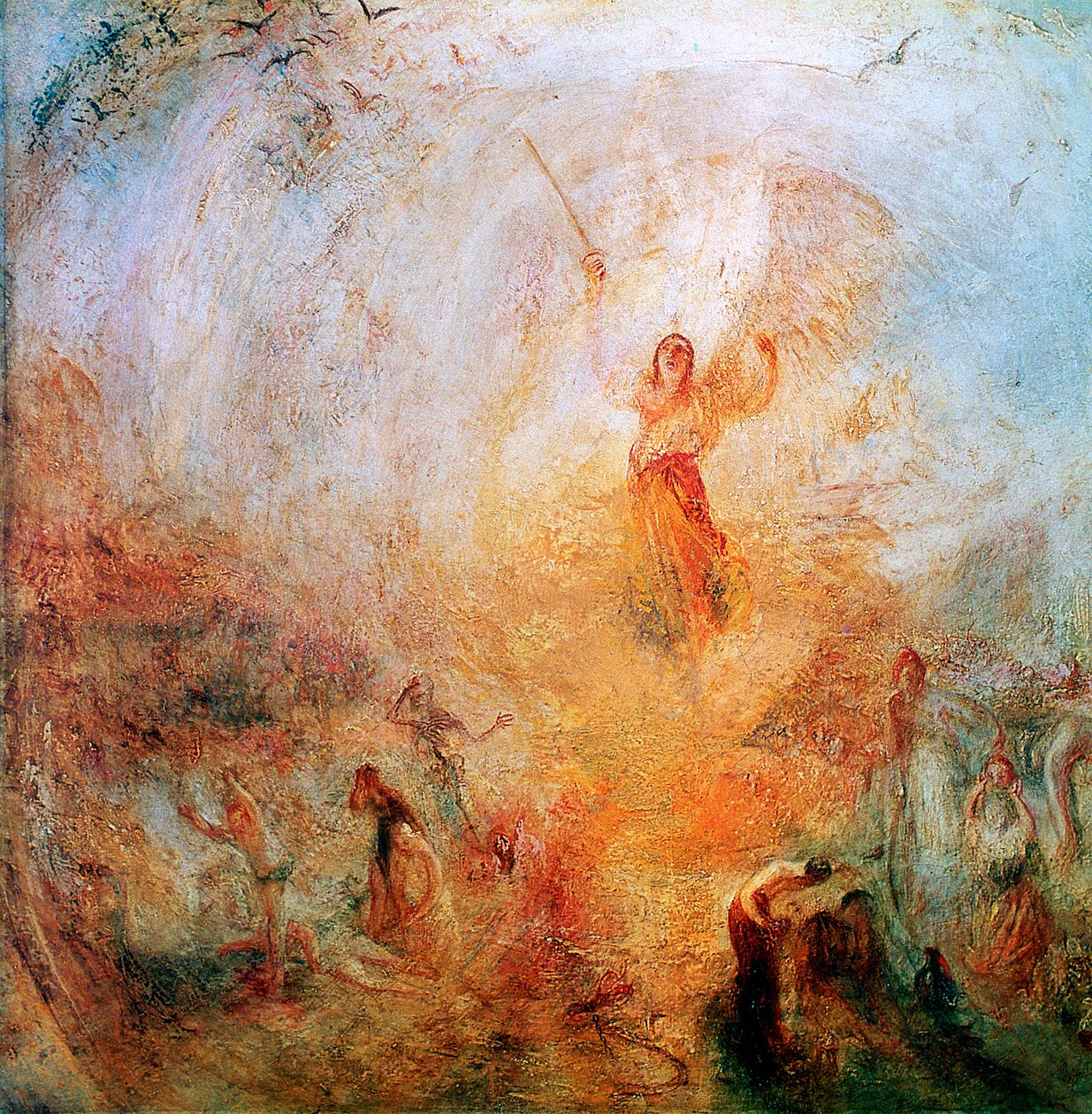
The Angel Standing in the Sun, 1846
by Joseph Mallord William Turner, Oil painting
The line has been widely associated with Turner near the end of his life, and the Getty noted that the sun appears prominently in many of his later works.
Whether read literally, poetically, or symbolically, the phrase captures something essential about Turner.
For him, the sun was not just a light source.
It was a force.
It shaped color.
It created drama.
It revealed and concealed.
It gave the landscape emotion.
It turned ordinary scenes into visions.
That is why Turner’s work feels connected to solar energy in a deeper way.
Solar technology captures sunlight physically.
Turner captured sunlight emotionally.
Why Turner Fits “Inspired by the Sun”
The Inspired by the Sun series is about more than solar technology.
It is about how sunlight has shaped human imagination.
Turner is a perfect first artist because his work reminds us that the sun has always been more than a utility source.
It is also:
- warmth
- motion
- awe
- time
- mood
- beauty
- uncertainty
- renewal
- power
Turner painted the sun as something that could overwhelm the human eye.
In some of his late works, the boundaries between sky, sea, air, and light seem to dissolve. The Getty’s exhibition on late Turner noted that his paintings may appear to focus on light and color, but they also open up deeper reflection on humanity’s place in history and nature.
That idea still matters.
Because energy is not only technical.
Energy is part of how we live inside the world.
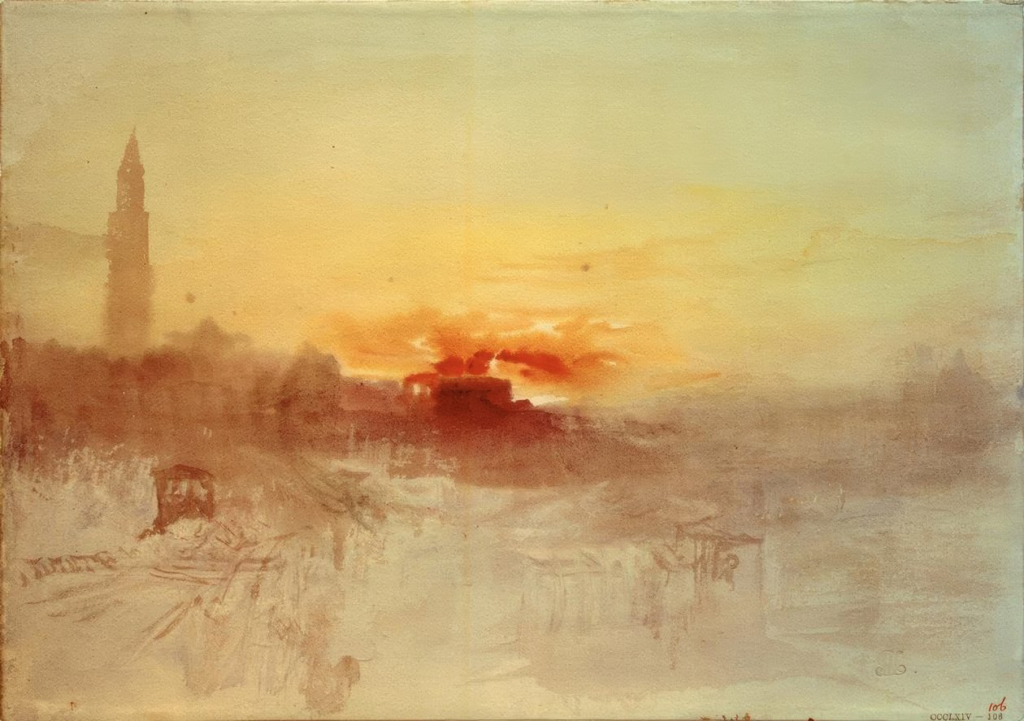
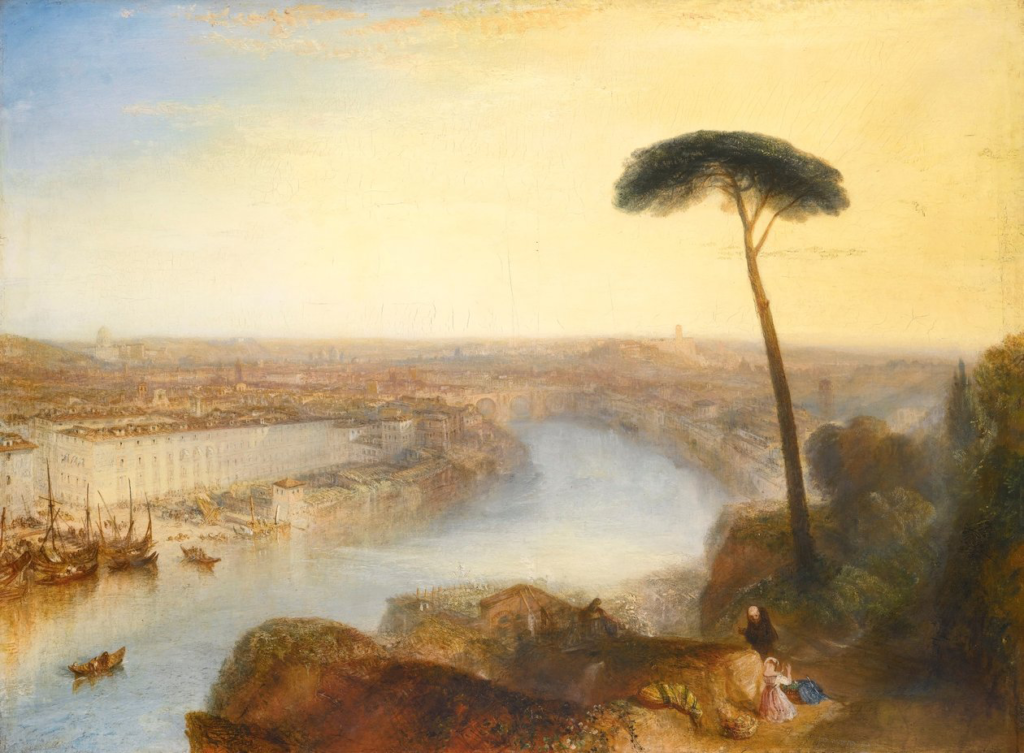
Venice at Sunrise from the Hotel Europa, with the Campanile
by Joseph Mallord William Turner, Watercolor, 1840
Light as Emotion
A bright morning feels different from a gray afternoon.
A sunset can stop people in their tracks.
Warm light through a window can change the feeling of a home.
Sunlight on water can feel peaceful, alive, endless.
Turner understood this.
He used light to create emotion.
Sometimes his sunlight feels calm.
Sometimes it feels violent.
Sometimes it feels hopeful.
Sometimes it feels almost too bright to look at.
That emotional range is what makes his sun paintings so powerful.
They remind us that light is not neutral.
Light changes how we feel.
And when a clean energy brand talks about sunlight, it should remember that.
The sun is not just a fuel source.
It is part of human experience.
From Turner’s Sun to Solar Energy
Turner lived long before rooftop solar became part of everyday life.
But his work helps us think about solar differently.
Solar energy is often explained through numbers:
kilowatt-hours
panel efficiency
utility rates
payback periods
battery capacity
tax credits
net metering
Those things matter.
But they are not the whole story.
Solar also represents a new relationship with light.
Instead of only admiring sunlight, we can now use it.
Instead of depending fully on distant power plants, a home or business can produce energy where it stands.
Instead of treating the sun as scenery, we can treat it as part of a smarter energy system.
Turner helps us remember the emotional side of that shift.
Solar is technology.
But it begins with wonder.
What Homeowners and Businesses Can Learn From Turner
Turner probably would not have thought in terms of solar panels, batteries, or electric bills.
But his art carries a useful lesson:
Pay attention to light.
For homeowners, light affects comfort, energy use, home design, and the value of rooftop solar.
For businesses, light affects buildings, operating costs, guest experience, workspace design, and sustainability planning.
For communities, light shapes architecture, streets, public space, and the rhythm of daily life.
Solar energy starts with a practical question:
How much sunlight can this property use?
But it also connects to a bigger question:
How do we want to live with the energy around us?
That is where art and energy meet.
Why This Matters to Sabio
At Sabio Energy, we believe solar should be practical, clear, and honest.
But energy is also deeply human.
Long before solar panels, people looked to the sun for warmth, rhythm, beauty, and meaning. Turner’s work reminds us that sunlight has always shaped the way we see the world.
Today, solar gives us a new way to relate to that same light.
Not just as something we admire.
As something we can understand, use, and build around.
Sabio Takeaway
J.M.W. Turner painted sunlight as emotion, atmosphere, and power.
His work reminds us that the sun is more than a source of energy. It is part of human imagination.
That is why he felt like the right artist to begin this series.