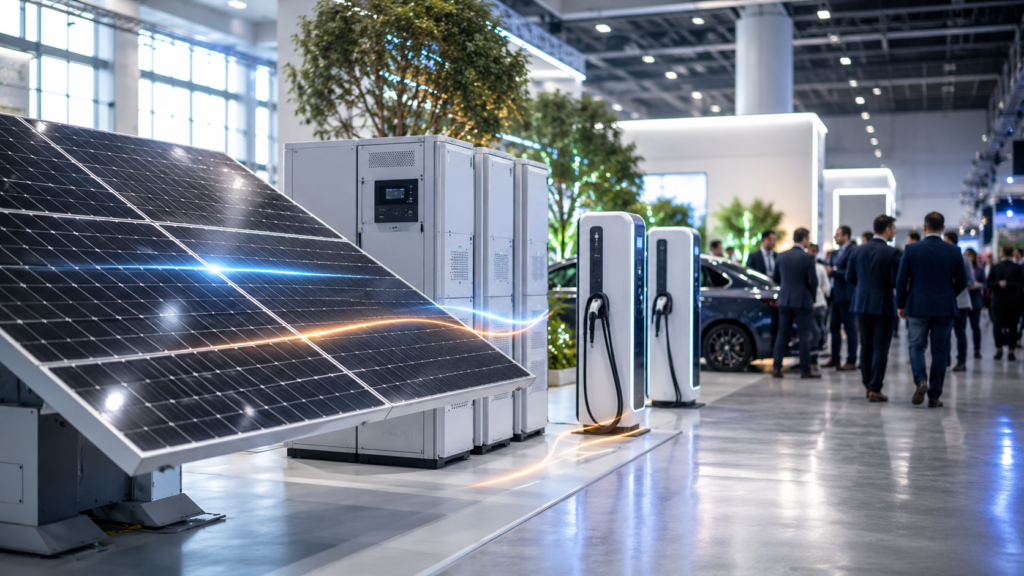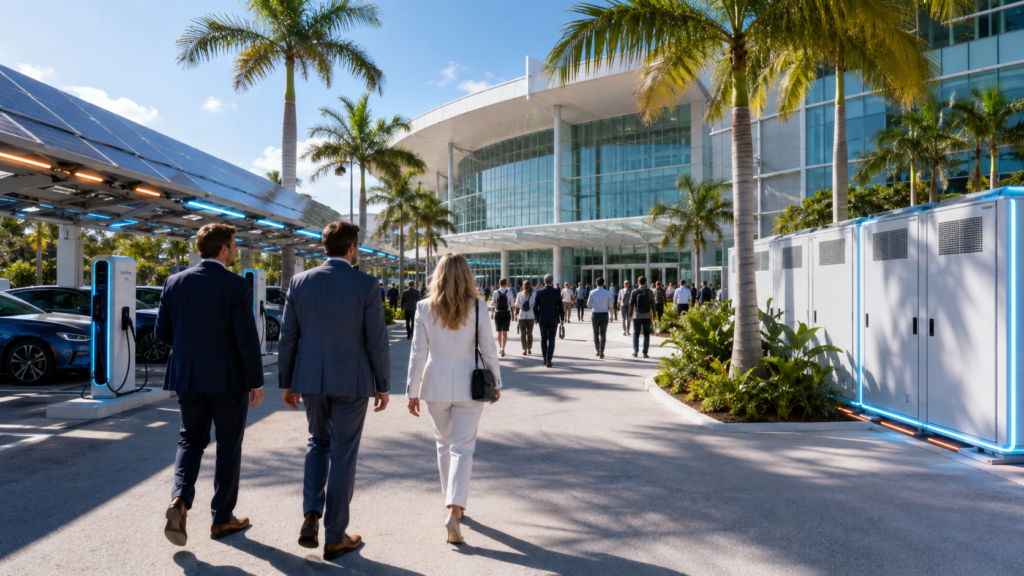

Solar events are not just for installers and energy companies. They reveal what businesses should prepare for next.
Most business owners will never attend a clean energy conference.
They are busy running the business.
Managing employees.
Serving customers.
Handling expenses.
Watching margins.
Dealing with rent, insurance, payroll, equipment, inventory, and operations.
Energy may not always be at the top of the list.
But that is changing.
Electricity is becoming a bigger business issue.
Utility rates are rising.
Battery storage is becoming more common.
EV charging is becoming a property feature.
Data centers and electrification are putting pressure on the grid.
Businesses are paying closer attention to resilience, demand charges, and long-term operating costs.
That is why clean energy conferences matter.
They show where the industry is going before many business owners feel the full impact.
The goal is not to chase every trend.
The goal is to understand which trends could affect your building, your costs, your customers, and your future plans.
Why Business Owners Should Pay Attention
Clean energy conferences can look technical from the outside.
Solar panels.
Inverters.
Battery systems.
EV chargers.
Grid software.
Microgrids.
Financing products.
Utility programs.
Monitoring platforms.
But behind all the technology is a simple business question:
How will energy affect operating costs and property value over the next few years?
For many businesses, electricity used to feel like a fixed monthly expense.
Now it is becoming more strategic.
A warehouse may need to think about fleet charging.
A hotel may need backup power and EV charging for guests.
A retail center may want solar canopies and chargers to attract visitors.
An office building may need to modernize for tenants.
A manufacturer may need to control demand spikes.
A restaurant may need to manage refrigeration, HVAC, and peak usage.
A data center may need a full energy strategy.
Different businesses have different needs.
But the direction is the same:
Energy is becoming part of business planning.
Lesson #1: Solar Is Becoming a Business Strategy
The first lesson from clean energy conferences is that solar is no longer just a “green” upgrade.
For businesses, solar is increasingly about:
- reducing operating costs
- managing utility rate exposure
- improving property value
- supporting sustainability goals
- powering EV charging
- reducing daytime grid purchases
- creating a more modern building
- pairing with battery storage
- improving long-term energy planning
That matters because many commercial buildings have large unused surfaces.
A warehouse roof.
A retail center roof.
A hotel roof.
A parking lot.
A manufacturing facility.
A commercial campus.
Those spaces can become productive energy assets.
The question is not only:
Can solar lower the bill?
The better question is:
Can solar make this property more financially stable and future-ready?
Lesson #2: Batteries Are Becoming More Important
Battery storage keeps showing up at clean energy events because it solves a different problem than solar.
Solar helps produce electricity.
Batteries help control when electricity is used.
That can matter for businesses because commercial electric bills are often more complicated than residential bills.
A business may pay not only for total energy use, but also for peak demand.
That means one high-demand moment can affect the bill.
Battery storage can help with:
- demand charge management
- backup power
- load shifting
- time-of-use rate management
- EV charging support
- resilience
- solar self-consumption
- microgrid planning
Batteries are not automatically right for every property.
But they should be evaluated seriously when the business has high peaks, backup needs, EV charging plans, or expensive utility rates.
The lesson is simple:
Solar can reduce energy purchases. Batteries can improve energy control.
Lesson #3: EV Charging Is Becoming a Property Decision
EV charging is another major topic at energy events.
But business owners should not think of EV charging as only a vehicle issue.
It is a property issue.
EV charging can affect:
- electrical capacity
- utility bills
- demand charges
- customer experience
- tenant expectations
- fleet operations
- parking design
- hotel amenities
- retail traffic
- employee benefits
- brand perception
For a hotel, EV charging may help attract guests.
For a retail center, chargers may increase customer dwell time.
For an office building, charging may support tenants and employees.
For a warehouse, fleet charging may become a logistics issue.
For multifamily properties, charging may become a tenant expectation.
But chargers add load.
That means they should be planned with solar, battery storage, utility rates, and electrical infrastructure.
The mistake is installing chargers without thinking about the energy system behind them.
The smarter move is to ask:
How will EV charging affect this property’s long-term energy needs?
Lesson #4: Energy Software Is Becoming More Useful
Clean energy conferences are full of software.
Some of it is technical.
Some of it is overhyped.
Some of it is genuinely useful.
The useful software helps businesses understand what is happening inside their energy system.
That may include:
- solar production
- battery performance
- building usage patterns
- EV charging demand
- demand peaks
- outage behavior
- utility rate timing
- equipment performance
- energy waste
- system alerts
This matters because many businesses do not truly understand when they use the most power.
They only see the bill later.
Better monitoring can help a business identify patterns.
Maybe the HVAC system creates a morning spike.
Maybe EV chargers run during expensive hours.
Maybe refrigeration loads overlap with peak pricing.
Maybe lighting schedules are wasting energy.
Maybe equipment startups create demand spikes.
Energy data turns the bill into a map.
That map helps businesses make better decisions.
Lesson #5: Microgrids Are Moving From Niche to Practical
Microgrids are another major topic in the future of commercial energy.
A microgrid is a local energy system that can include solar, batteries, generators, controls, and critical load planning.
Not every business needs a microgrid.
But some properties should pay attention.
Microgrids may matter for:
- hospitals
- data centers
- manufacturing facilities
- campuses
- hotels
- cold storage facilities
- emergency services
- large commercial sites
- remote facilities
- facilities with expensive downtime
The key point is that a microgrid is not just “solar plus battery.”
It is a designed system.
It considers what needs to stay powered, how long backup is needed, how loads are prioritized, and how the system interacts with the grid.
For business owners, the lesson is this:
Resilience needs design.
Backup power should not be guessed.
Lesson #6: Financing Is Becoming More Flexible
Another thing business owners can learn from energy conferences is that financing options continue to evolve.
Commercial solar may be structured in different ways, including:
- cash purchase
- solar loan
- lease
- power purchase agreement
- operating expense model
- third-party ownership
- tax-credit-focused structures
- solar + storage financing
- EV charging partnerships
The best option depends on the business.
Some owners want maximum long-term savings.
Some want low upfront cost.
Some want predictable monthly payments.
Some want to preserve capital.
Some want to improve property value.
Some want a solution that tenants can benefit from.
The important thing is not to choose financing first.
The better approach is:
Understand the property, usage, goals, and tax position — then choose the financial structure.
A bad financing structure can make a decent solar project feel weak.
A smart structure can make a strong project easier to move forward.
Lesson #7: The Grid Is Becoming Part of Every Energy Decision
For years, businesses mostly thought about their own building.
Now they also need to think about the grid.
That is because grid conditions can affect:
- utility rates
- interconnection timelines
- transformer capacity
- demand charges
- EV charging approvals
- solar export rules
- outage risk
- backup planning
- project timelines
A business may want solar, but the utility still needs to approve interconnection.
A business may want EV chargers, but the electrical service may need upgrades.
A business may want battery storage, but the design may need fire and utility review.
A business may want backup power, but critical loads need to be identified.
The energy system outside the building now affects the decisions inside the building.
That is one of the biggest lessons from clean energy events.
What Types of Businesses Should Pay Attention
Clean energy conferences are especially relevant for businesses with high electricity usage, large property footprints, or future growth plans.
That includes:
- warehouses
- distribution centers
- hotels
- retail centers
- office buildings
- commercial real estate portfolios
- manufacturing facilities
- cold storage facilities
- restaurants
- schools
- medical buildings
- multifamily properties
- data centers
- fleet operators
But even smaller businesses should pay attention if their electric bill is becoming harder to manage.
Energy does not need to be your largest expense to become a strategic issue.
It just needs to become unpredictable enough to matter.
What Business Owners Should Ask After Reading Event Coverage
You do not need to know every product from every expo.
But you should ask better questions.
Is my electric bill rising faster than expected?
Do I have demand charges?
When does my business use the most power?
Could solar reduce daytime grid purchases?
Would battery storage help with peaks or backup?
Will EV charging become part of this property?
Is my roof or parking area useful for solar?
Do I understand my utility rate structure?
Could outages affect operations or customers?
Am I planning for the next 5 to 10 years, or only reacting to this year’s bill?
Those questions are more valuable than any single product announcement.
What Sabio Is Watching
When Sabio looks at clean energy conferences, the focus is not hype.
The focus is practical value.
Sabio watches for:
- solar products that improve performance
- batteries that solve real timing and backup problems
- EV charging systems that make sense for buildings
- energy software that helps customers understand usage
- financing models that reduce confusion
- microgrid solutions that are realistic
- commercial energy trends that affect property owners
- utility and grid issues that could affect project timelines
- clear explanations instead of buzzwords
The energy industry can get complicated quickly.
Sabio’s job is to make the important parts easier to understand.
The Emotional Side of Business Energy Planning
Business owners do not want another complicated thing to manage.
They want fewer surprises.
They want predictable costs.
They want smoother operations.
They want buildings that feel modern.
They want customers and tenants to feel supported.
They want to avoid expensive mistakes.
They want to know they are not falling behind.
That is why clean energy conferences matter.
They help show what is coming before it becomes urgent.
The emotional value is not the technology itself.
The value is confidence.
Sabio Takeaway
Clean energy conferences are not just industry events.
They are early signals.
They show where solar, batteries, EV charging, microgrids, software, and energy financing are heading.
For business owners, the lesson is simple:
Energy is becoming more strategic.
The smartest businesses will not wait until the electric bill becomes a problem.
They will understand their usage, review their property, watch the trends, and make decisions before they are forced to react.
Solar can reduce costs.
Battery storage can add control.
EV charging can support customers, tenants, or fleets.
Smart monitoring can reveal hidden patterns.
Microgrids can support resilience.
The future of business energy is not just about buying equipment.
It is about building a smarter energy plan.
Sabio can help you look at your property, your usage, and your long-term energy goals clearly.