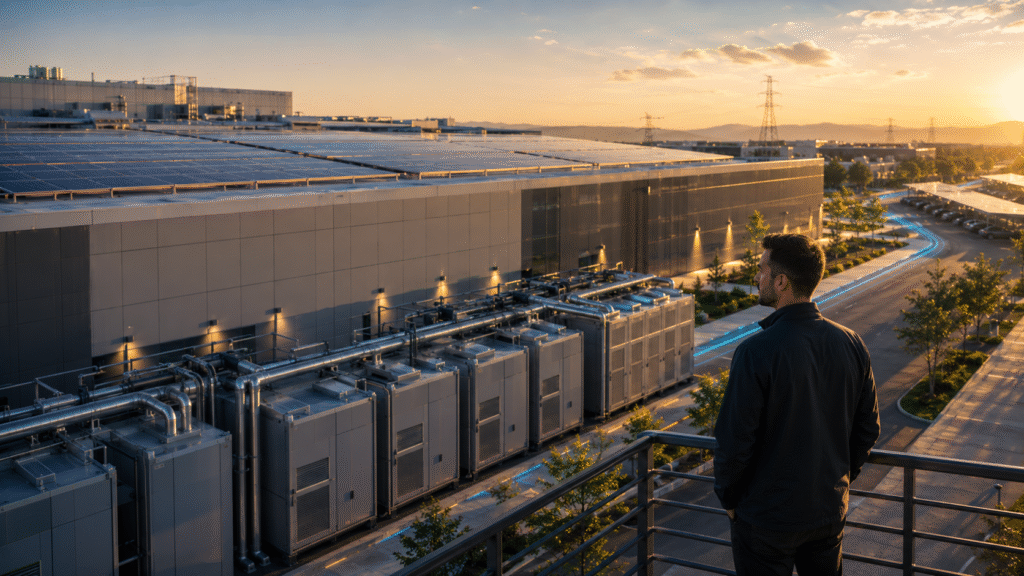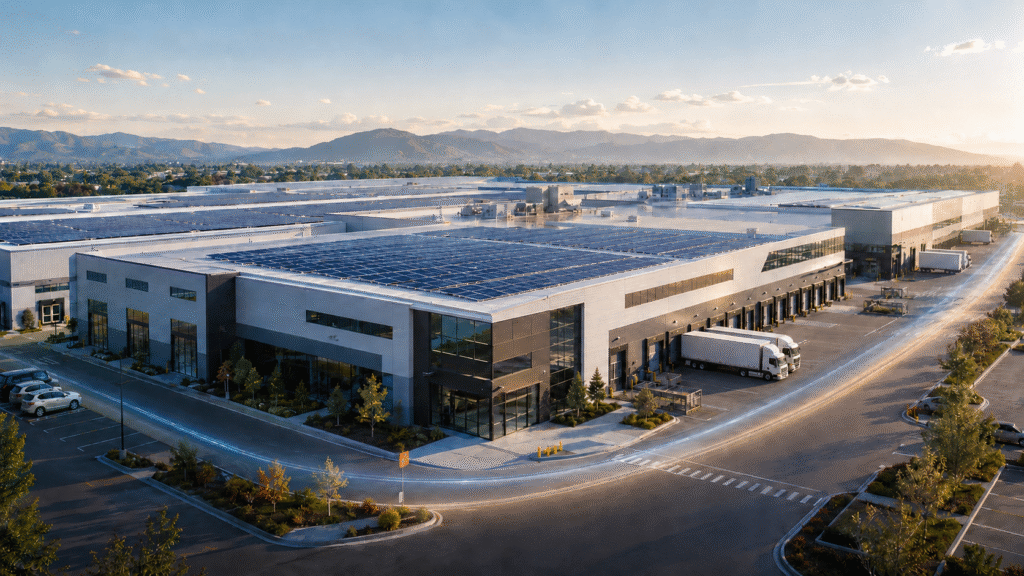
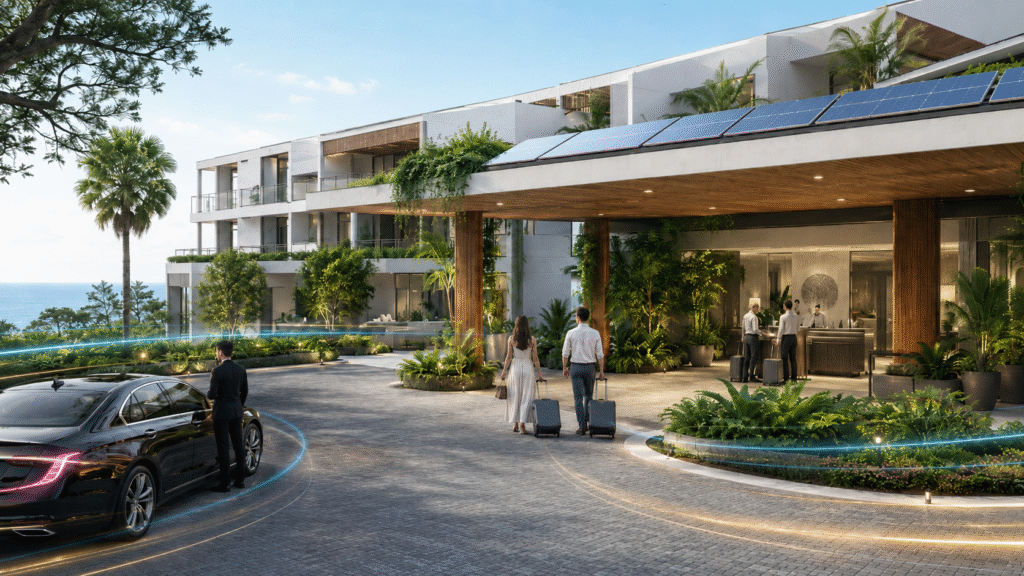
In hospitality, energy is part of the guest experience.
Hotels, resorts, motels, event venues, and hospitality properties never really stop using power.
Lights stay on.
HVAC runs constantly.
Laundry equipment works in the background.
Kitchens, elevators, pools, hot water systems, refrigeration, security, and guest rooms all depend on electricity.
And when energy costs rise, the pressure does not stay hidden.
It affects operating expenses.
It affects margins.
It affects comfort.
It affects the guest experience.
It affects how predictable the business feels.
For hospitality properties, solar is not just about sustainability.
It is about making the building work smarter.
Why Hotels and Hospitality Properties Look at Solar
Hotels are energy-intensive businesses.
Even when occupancy changes, the building still has to operate.
Energy may be used for:
- guest room HVAC
- lighting
- elevators
- laundry
- kitchens
- refrigeration
- hot water systems
- pool pumps
- spas
- gyms
- conference rooms
- event spaces
- security systems
- parking lot lighting
- EV charging
- back-office operations
That makes energy one of the most important operating costs in hospitality.
Commercial solar can help reduce how much electricity the property buys from the grid, especially during daylight hours.
Battery storage may also help with peak demand, backup planning, and energy control.
Hospitality Solar Is Not Just About Lower Bills
Lowering utility costs matters.
But hotels and hospitality properties also care about something else:
the feeling of reliability.
Guests expect comfort.
They do not care if utility rates are rising.
They do not care if the grid is stressed.
They do not care if demand charges are complicated.
They expect the room to be cool.
The lights to work.
The elevator to run.
The kitchen to operate.
The Wi-Fi to stay on.
The property to feel smooth.
Solar can support that broader property strategy.
It can help with:
- operating cost control
- energy predictability
- sustainability goals
- brand perception
- guest experience
- EV charging
- resilience planning
- long-term property value
- reduced exposure to utility rate increases
For hospitality, solar is not just a facility upgrade.
It is part of how the property performs.
The Energy Problem in Hotels
Hotels have a unique energy pattern.
They may use power:
- during the day
- at night
- during weekends
- during peak travel seasons
- during events
- during high occupancy periods
- during extreme heat or cold
That means the solar strategy needs to match the property’s actual usage.
A hotel with strong daytime HVAC, laundry, kitchen, pool, and common-area loads may be a good fit for solar-only.
A hotel with high evening usage, demand charges, backup concerns, or EV charging plans may need to consider solar + battery storage.
The right system depends on the building.
Not the category.
Solar-Only for Hotels
Solar-only can be a strong fit when the property uses meaningful power during daylight hours.
That daytime usage may include:
- air conditioning
- laundry
- kitchens
- refrigeration
- common areas
- offices
- pool systems
- elevators
- guest amenities
- conference rooms
- cleaning operations
- EV chargers
Solar can help offset some of that usage and reduce electricity purchased from the utility.
For many hospitality properties, this is the simplest first step.
Solar-only may work well when:
- the property has strong daytime usage
- roof or land space is available
- demand charges are not the main issue
- backup power is not the main priority
- the financial case works without storage
- the building has long-term ownership or control
Sabio takeaway
Solar-only can be a clean, practical move when the property uses energy while the sun is producing.
Solar + Battery for Hospitality
Battery storage becomes more important when the property needs more control.
A commercial battery may help with:
- demand charge management
- peak shaving
- load shifting
- backup support
- EV charging support
- time-of-use rate management
- resilience planning
- critical load protection
For hotels, storage may be especially worth reviewing if the property has:
- expensive demand charges
- high HVAC peaks
- refrigeration loads
- event spaces
- EV charging
- outage concerns
- critical systems
- weak grid reliability
- high evening usage
Battery storage does not automatically make sense for every hotel.
But when the property has expensive peaks or resilience needs, it can become part of a smarter strategy.
Sabio takeaway
Solar helps lower grid purchases. Storage helps manage the moments that matter most.
Guest Comfort Changes the Energy Conversation
In some businesses, reducing energy use is mostly about cost.
In hospitality, energy is tied directly to comfort.
Guests expect:
- comfortable rooms
- reliable lighting
- working elevators
- strong Wi-Fi
- functioning amenities
- hot water
- food service
- safe parking areas
- smooth events
That means energy interruptions can affect more than operations.
They can affect reviews, reputation, and repeat business.
Solar may help reduce costs.
Battery storage or backup planning may help protect critical parts of the guest experience.
Sabio takeaway
For hotels, energy strategy is also guest experience strategy.
EV Charging for Hotels and Resorts
EV charging is becoming more important for hospitality properties.
Guests may increasingly expect charging options at:
- hotels
- resorts
- motels
- conference centers
- event venues
- restaurants
- destination properties
- airport hotels
- highway hotels
EV charging can become an amenity.
But it also creates new electrical demand.
That means hotels should think about:
- charger quantity
- charging speed
- guest dwell time
- valet or self-parking setup
- demand charges
- parking layout
- solar production
- battery storage
- future expansion
- utility capacity
EV charging should not be added blindly.
It should be designed into the property’s energy plan.
Sabio takeaway
EV charging can improve the guest experience, but it has to be planned like an energy load.
Solar Carports for Hotel Parking Lots
Many hospitality properties have parking areas.
That creates another solar opportunity.
Solar carports may help:
- produce onsite power
- shade guest vehicles
- support EV charging
- improve property appearance
- add visible sustainability value
- use parking areas more productively
- increase solar capacity when roof space is limited
Carports are usually more expensive than rooftop solar.
But for hotels, they may offer value beyond energy production.
They can improve guest comfort, support EV charging, and make the clean energy investment visible.
Sabio takeaway
For hospitality properties, the parking lot can become part of the energy strategy.
Resorts and Destination Properties
Resorts often have larger property footprints and more energy-intensive amenities.
Energy may be used for:
- pools
- spas
- restaurants
- bars
- event spaces
- landscaping systems
- golf carts
- guest villas
- laundry
- cooling
- lighting
- security
- EV charging
Resorts may have more opportunities for:
- rooftop solar
- ground-mounted solar
- solar carports
- battery storage
- microgrid planning
- backup support
- phased energy upgrades
For destination properties, reliability and brand perception both matter.
A resort that can reduce energy costs while showing a cleaner, smarter energy strategy may strengthen its property story.
Event Venues and Conference Centers
Event venues have a different energy profile.
They may have periods of intense usage when events are happening.
Energy loads may come from:
- lighting
- sound systems
- kitchens
- HVAC
- refrigeration
- stage equipment
- elevators
- parking areas
- outdoor lighting
- guest facilities
Demand spikes can matter here.
A venue may not use extreme power all month, but major events can create expensive peaks.
That is why solar + battery may be worth reviewing for properties with high event-based demand.
Sabio takeaway
For event venues, the issue is not only total energy use. It is the intensity of the peak.
Restaurants Inside Hospitality Properties
Hotels and resorts often include restaurants, bars, cafes, kitchens, and banquet facilities.
These areas can create significant energy loads.
Common energy drivers include:
- refrigeration
- freezers
- ovens
- dishwashing
- ventilation
- lighting
- HVAC
- point-of-sale systems
- food storage
- event catering
If the property has major food service, solar design should account for kitchen and refrigeration loads.
A generic hotel solar proposal may miss this.
A smarter energy plan studies the full operation.
Demand Charges in Hospitality
Hotels and hospitality properties may face demand charges depending on the utility rate structure.
Demand charges are based on peak power draw.
In hospitality, peaks can come from:
- HVAC startup
- laundry equipment
- kitchens
- elevators
- EV chargers
- event spaces
- pool systems
- refrigeration
- multiple guest loads overlapping
This is why the utility bill needs to be reviewed carefully.
A hotel may need solar-only.
Or it may need solar + battery to manage expensive peaks.
The numbers decide.
What Makes a Hotel a Strong Solar Candidate?
A hospitality property may be a strong candidate if it has:
- high electric bills
- strong daytime usage
- usable roof space
- parking areas for solar carports
- long-term property ownership
- good sun exposure
- demand charges
- EV charging plans
- sustainability goals
- guest-facing brand value
- backup or resilience concerns
- roof condition that supports solar
- interest in reducing operating costs
The strongest projects connect energy savings with property strategy.
What Can Make Hotel Solar More Difficult?
Hospitality solar may be harder if:
- roof space is limited
- the roof is old or crowded with equipment
- the property has heavy nighttime usage
- electrical systems need upgrades
- demand charges are misunderstood
- construction would disrupt guests
- parking disruption is difficult
- utility rules are unfavorable
- ownership structure is unclear
- financing does not fit the business
- backup expectations are unrealistic
These issues do not automatically stop a project.
But they need to be handled early.
Hotels cannot afford chaotic construction or vague energy promises.
Construction and Guest Disruption
This is a major concern for hospitality properties.
A solar installation may affect:
- roof access
- parking areas
- guest movement
- loading areas
- noise
- electrical shutdown timing
- event schedules
- staff operations
- safety zones
The goal is not pretending installation has no impact.
The goal is planning around the guest experience.
A serious commercial solar plan should explain:
- when work happens
- what areas are affected
- whether guests will notice
- how parking is managed
- whether shutdowns are needed
- how events are protected
- how safety is handled
Sabio takeaway
For hotels, a solar project has to respect the business while improving the building.
The Brand and Sustainability Angle
Hospitality is a reputation business.
Guests, companies, event planners, and corporate travel programs may care about sustainability.
Solar can support that story.
It may help a property show:
- cleaner operations
- smarter energy management
- EV charging readiness
- long-term investment
- environmental responsibility
- modern property positioning
But the message has to be honest.
Solar should not be used as decoration.
It should be connected to real energy production, measurable savings, and a credible property strategy.
Sabio takeaway
Sustainability is stronger when it is backed by real infrastructure.
The Emotional Side of Hotel Solar
Hotel owners and operators do not just want panels.
They want confidence.
They want to protect margins.
They want to avoid energy surprises.
They want guests to feel comfortable.
They want the property to feel modern.
They want to make a smart long-term investment without disrupting the experience they worked hard to create.
That is the emotional side.
Solar is not just about electricity.
It is about control.
The Sabio Way to Evaluate Hotel Solar
Sabio looks at the full hospitality operation.
1. Review the utility bill
Usage, demand charges, rate structure, seasonal patterns, and peak periods.
2. Study the property
Roof, parking, land, electrical access, shading, structural capacity, and guest-facing areas.
3. Understand operations
Occupancy, laundry, kitchens, HVAC, events, pools, refrigeration, and EV charging plans.
4. Compare system options
Solar-only, solar + battery, solar carports, EV charging, backup support, or phased energy strategy.
5. Build the business case
Savings, resilience, brand value, guest experience, financing, incentives, and long-term ownership goals.
The right hotel solar project is not generic.
It is designed around the way the property actually operates.
Simple Example
Imagine two hospitality properties.
Property A
- business hotel
- strong daytime HVAC and laundry load
- large roof
- long-term ownership
- modest demand charges
Solar-only may be a strong fit.
Property B
- resort with pools, restaurants, EV charging, events, and outage concerns
- high peaks
- strong brand value
- large parking areas
Solar + battery + carports + EV charging may create a stronger strategy.
Both are hospitality properties.
But the solar plan is different.
That is why the evaluation matters.
So, Is Solar Worth It for Hotels and Hospitality Properties?
Here is the clean answer:
Solar may be a strong fit for hotels and hospitality properties when the building has meaningful electricity usage, usable roof or parking space, clear property control, and a strategy that supports cost control, guest experience, EV charging, and long-term property value.
For some properties, solar-only may be enough.
For others, solar + battery, solar carports, EV charging, or resilience planning may create more value.
The right system depends on the property.
Not the pitch.
Sabio Takeaway
Hotels run on comfort.
Comfort runs on energy.
Solar can help make that energy more predictable, more strategic, and more controlled.
It can reduce costs.
It can support guest expectations.
It can prepare the property for EV charging.
It can strengthen the brand story.
It can turn unused roof or parking space into an asset.
That is smarter business energy.
Ready to See What Solar Could Do for Your Hotel or Hospitality Property?
We’ll help you review your utility bills, facility profile, energy usage, and goals — then show you whether solar, battery storage, EV charging, or a phased commercial energy strategy makes sense.