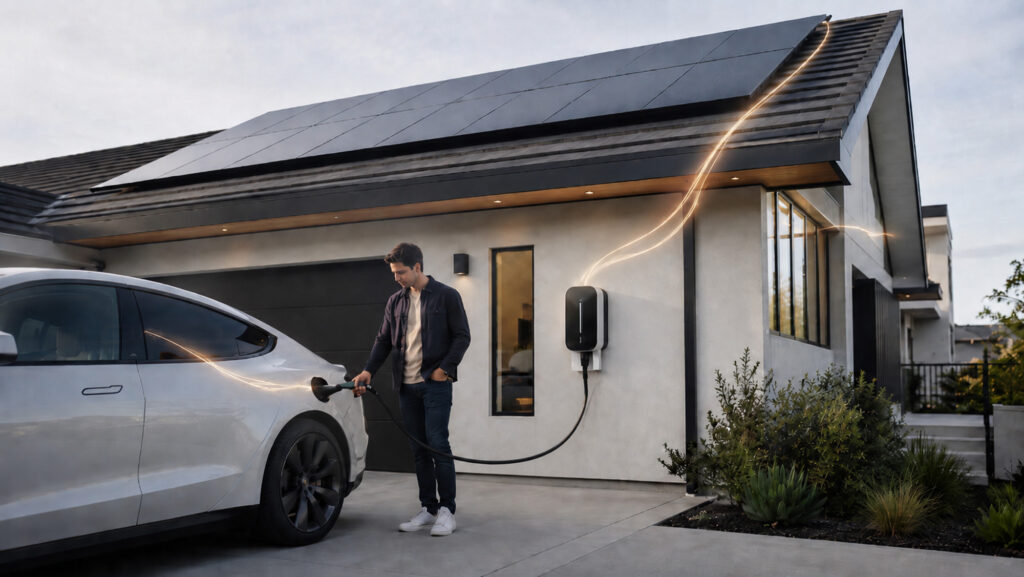
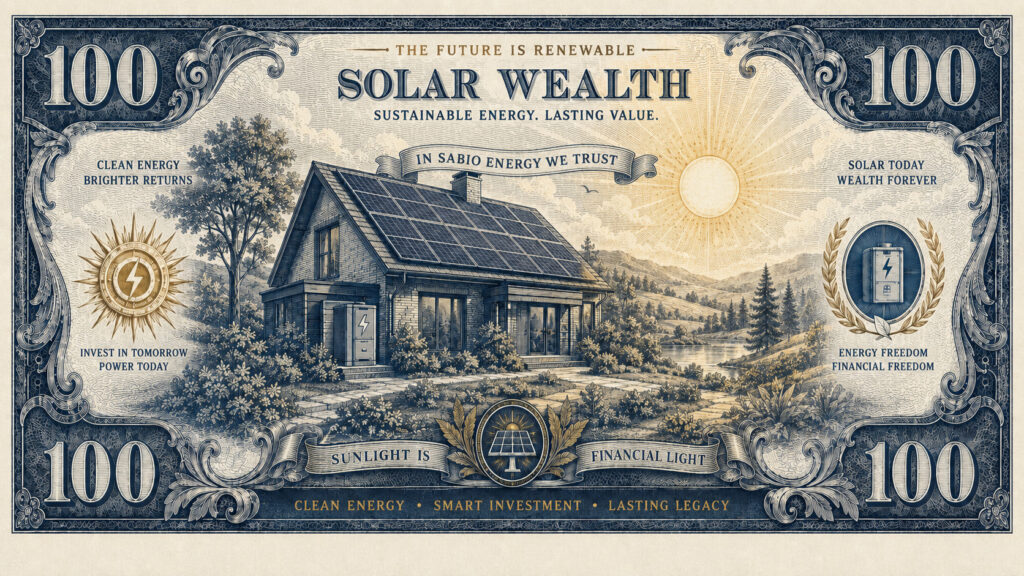
The honest answer: yes, but only if the system is designed around your real life.
For years, solar was sold like a simple equation:
Panels on roof.
Tax credit.
Lower bill.
Done.
But in 2026, solar is different.
The old federal residential solar tax credit is no longer available for new systems placed in service after December 31, 2025. That means homeowners can’t rely on the same easy 30% federal incentive that helped drive the market for years.
So the question is fair:
Is solar still worth it?
The answer is:
Yes, for the right home. No, for the wrong setup.
And that’s exactly why smart design matters more than ever.
Solar Is No Longer Just About Panels
The old solar conversation was about how many panels you could fit on your roof.
The new conversation is about control.
Control over:
- rising electric bills
- peak pricing
- utility rules
- outages
- battery storage
- how much of your own power you actually use
Solar can still be a powerful financial decision. But in 2026, the best systems are not just installed.
They are designed.
Why Solar Still Makes Sense
Solar can still be worth it because the core problem has not gone away.
Your utility bill is still a moving target.
Rates change. Fees increase. Usage shifts. And most homeowners have very little control over what happens next.
Solar gives you a different position.
Instead of buying every kilowatt-hour from the utility, your home can produce some of its own power.
That matters.
Not because solar is magic.
Because ownership changes the relationship.
You stop being only a customer.
You become part of your own energy system.
When Solar Is Usually Worth It
Solar is more likely to make sense if:
- your monthly electric bill is consistently high
- your roof gets strong sunlight
- your roof is in good condition
- you plan to stay in the home for several years
- your utility rates are rising
- your state or utility still offers meaningful incentives
- you are interested in battery backup
- you want less dependence on the grid
This is especially true in states where electricity costs are high, outages are common, or solar incentives are still strong.
When Solar May Not Be Worth It
Solar is not automatically the right move for everyone.
It may not make sense if:
- your bill is already very low
- your roof is heavily shaded
- your roof needs major repairs soon
- you plan to move quickly
- your utility offers poor solar compensation
- you are pushed into the wrong financing structure
- the system is oversized just to make the quote look better
This is where bad solar companies create problems.
They sell the dream before checking the math.
Sabio’s view is simple:
The best solar system is not the biggest system. It is the right system.
The Battery Question Matters More Now
In 2026, batteries are no longer just a backup option.
They can be part of the financial strategy.
Why?
Because some states no longer reward exported solar power the way they used to.
California is the clearest example. Newer solar customers are under the Net Billing Tariff, and the older NEM tariffs are closed to new enrollments. Under older NEM structures, exported energy could be credited differently than it is under today’s net billing rules.
That changes the strategy.
Instead of sending extra power back to the grid for less value, a battery can help you store more of your own solar energy and use it later.
At night.
During peak pricing.
During an outage.
That’s why the real question is not:
Do I need solar?
It’s:
Should I design solar with storage from the beginning?
Solar by State: Why Location Matters
In 2026, solar is local.
The same system can perform very differently depending on where you live.
California
California is now a solar-plus-battery market. High electric rates and net billing rules make system design extremely important. Solar can still make sense, but storage often plays a bigger role than it used to.
Texas
Texas depends heavily on your retail electric provider and utility area. Some providers offer solar buyback plans, but terms vary. Green Mountain Energy, for example, describes plans that credit customers for excess solar energy sent back to the grid.
Florida
Florida still has net metering rules for renewable-energy systems up to 2 MW, according to DSIRE’s Florida net metering summary. For homeowners with strong sun exposure and heavy cooling loads, solar can remain attractive.
New Jersey
New Jersey continues to support solar through its Successor Solar Incentive program. DSIRE notes that the ADI Program provides incentives for net-metered residential solar projects.
Arizona
Arizona has excellent sunlight, but utility export rates matter. DSIRE lists current export compensation rates for major Arizona utilities, including APS, Tucson Electric Power, and others.
The Emotional Side Nobody Talks About
Solar is usually sold with numbers.
Savings.
Payback.
Production.
Kilowatt-hours.
Those numbers matter.
But they are not the whole story.
People also want to feel like their home is working for them, not against them.
They want to stop opening a utility bill with anxiety.
They want to know their family has options if the grid goes down.
They want to feel like they made a smart long-term decision.
That is not hype.
That is what energy is really about.
Comfort.
Security.
Control.
So, Is Solar Still Worth It in 2026?
Here is the clean answer:
Solar is still worth it when the system is designed around your bill, your roof, your utility rules, your state incentives, and your long-term goals.
It is not worth it when someone gives you a generic quote and hopes you do not ask questions.
In 2026, homeowners need more than panels.
They need clarity.
Sabio Takeaway
The future of solar is not about chasing incentives.
It is about building a smarter home energy strategy.
Your home already uses energy every day.
The question is:
Do you want to keep renting all of it from the utility? Or start producing more of it yourself?
Ready to See If Solar Makes Sense for Your Home?
We help decode it, then show you whether solar, battery storage, or a smarter energy plan makes sense.