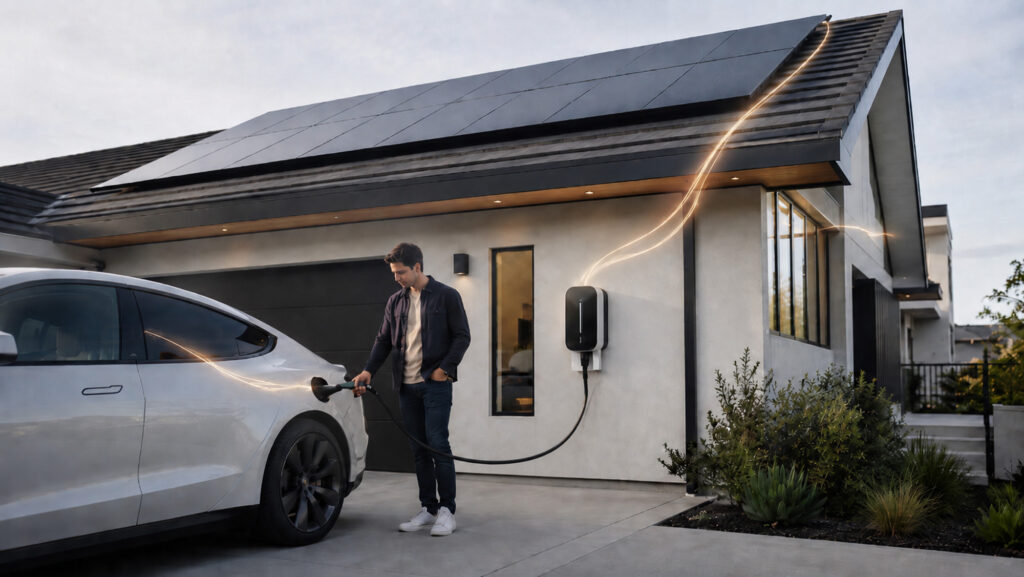

The honest answer: solar can still be a smart move in 2026, but the best decision depends on your home, your utility, your bill, and your goals.
Solar is simple in theory.
Sunlight hits panels.
Panels make electricity.
Your home uses that electricity.
But the buying decision?
That part can feel confusing.
Tax credits changed.
Battery storage matters more.
Utility rules vary by state.
Financing options can be hard to compare.
And every solar company seems to explain things differently.
So this guide answers the questions homeowners actually ask before going solar.
No pressure.
Just clarity.
1. Is residential solar still worth it in 2026?
Yes — for the right home.
Solar can still make sense if your electric bill is high, your roof gets good sunlight, your utility rates are rising, and you plan to stay in your home long enough to benefit from the system.
But in 2026, solar is more local than ever.
Your state, utility rules, battery strategy, and financing structure matter more because the old federal Residential Clean Energy Credit is no longer available for property placed in service after December 31, 2025, according to the IRS.
So the real answer is:
Solar is worth it when the system is designed around your actual home — not a generic sales pitch.
2. Did the federal residential solar tax credit end?
Yes, for new property placed in service after December 31, 2025.
The IRS says the Residential Clean Energy Credit equaled 30% of qualified residential clean energy property costs for systems installed from 2022 through December 31, 2025, and is not available for property placed in service after that date.
That does not mean solar is dead.
It means homeowners in 2026 need to look more closely at:
- local incentives
- utility rates
- battery storage
- financing options
- lease or PPA structures
- long-term savings
- state-specific solar rules
The easy federal shortcut is gone.
The smarter local strategy matters more now.
3. Do I need a battery with solar?
Not always.
But batteries are becoming more important.
A solar-only system produces power when the sun is out. A solar + battery system lets you store some of that power and use it later — at night, during peak pricing hours, or during outages.
The U.S. Department of Energy explains that energy storage can help make solar electricity available when sunlight is not, including when it is needed later.
You may want a battery if:
- your utility has time-of-use pricing
- outages are common in your area
- exported solar is not credited generously
- you want backup power
- you want to use more of your own solar energy
A battery is not just backup.
In many homes, it is strategy.
4. Will solar eliminate my electric bill?
Sometimes, but not always.
A more honest goal is:
lower cost, more control, and less exposure to rising rates.
Most solar homeowners may still have some utility charges, such as connection fees, delivery charges, or usage charges when the system is not producing enough.
If someone promises a “zero bill” without explaining your utility rules, rate plan, battery design, and remaining charges, be careful.
The better question is not:
“Will my bill be zero?”
The better question is:
How much can solar reduce my utility dependence?
5. How many solar panels do I need?
It depends on your actual energy usage.
The starting point is your electric bill — specifically your annual kWh usage.
The U.S. Department of Energy notes that there is not one universal solar solution and homeowners should consider factors like energy use, roof conditions, cost, and goals before going solar.
A good solar design should consider:
- 12 months of electric usage
- roof size and orientation
- shade
- local sunlight
- utility rate plan
- future EV charging
- battery storage
- whether your goal is bill savings or backup power
The goal is not the most panels.
The goal is the right system.
6. What happens if my roof is old?
If your roof needs replacement soon, fix that before installing solar.
Solar panels can last decades. If the roof under them is near the end of its life, you may have to remove and reinstall the panels later, which can add cost and hassle.
Before going solar, ask:
- How old is my roof?
- Are there leaks?
- Are shingles damaged?
- Will the roof last another 10–15 years?
- Does the installer inspect roof condition first?
Solar should make your home smarter.
It should not create a roof problem.
7. Will solar damage my roof?
Solar should not damage your roof when installed correctly.
The risk usually comes from poor workmanship, old roof conditions, rushed installation, or unqualified contractors.
A proper installation should include:
- roof assessment
- correct mounting hardware
- proper flashing and sealing
- permits
- inspections
- code-compliant electrical work
The Department of Energy explains that qualified installers design solar systems to meet local building, fire, and electrical codes.
The installer matters.
A lot.
8. What happens during a solar installation?
The basic process usually looks like this:
- bill review
- roof and home assessment
- system design
- permits
- utility paperwork
- installation
- inspection
- utility approval
- system activation
- monitoring setup
The physical install may be quick, but the full process can take longer because of permitting, inspection, and utility approval.
The key is communication.
A good installer should tell you what happens next before you have to ask.
9. What is Permission to Operate?
Permission to Operate, often called PTO, is utility approval to turn on your solar system and connect it to the grid.
Even after panels are installed, the system may not officially operate until the utility approves interconnection.
This can feel frustrating, but it is normal.
The utility has to confirm that the system meets interconnection requirements and can safely operate with the grid.
Do not be surprised if your system is physically installed before it is fully active.
10. What is net metering?
Net metering is a billing structure where homeowners receive bill credits for excess solar power sent to the grid.
Under older California NEM tariffs, customers received credits for exported generation at retail rates, but those tariffs are now closed to new enrollments.
Net metering rules vary by state and utility.
That is why solar cannot be explained with one national answer anymore.
Your utility rules matter.
11. What is net billing?
Net billing is different from traditional net metering.
Under California’s Net Billing Tariff, new solar customers are compensated under a newer structure that replaced NEM 2.0 for applications submitted on or after April 15, 2023.
In plain English:
You may not receive the same value for exported solar as you pay for electricity from the grid.
That is why batteries can matter more under net billing.
If exporting power is less valuable, using your own power becomes more valuable.
12. Is solar different in California, Texas, Florida, New Jersey, and Arizona?
Yes.
Very different.
California
Solar is increasingly a solar + battery market because of net billing and high electricity rates.
Texas
Solar depends heavily on your retail electric provider, buyback terms, and outage concerns.
Florida
Solar can benefit from strong sun and high cooling demand, but utility rules and storm resilience matter.
New Jersey
New Jersey still has a strong solar policy environment compared with many states, but ownership, incentives, and market conditions matter.
Arizona
Arizona has excellent sunlight, but utility export rates and rate plans heavily affect savings.
Solar is local now.
Your state matters.
Your utility matters even more.
13. Should I buy, finance, lease, or use a PPA?
It depends on what you value most.
Buy with cash
Usually strongest long-term savings, but highest upfront cost.
Solar loan
Ownership without paying everything upfront, but interest rates, fees, and loan terms matter.
Lease
Lower upfront cost and less maintenance responsibility, but you usually do not own the system.
PPA
You buy solar power from a third-party-owned system, usually at a set rate.
The best option depends on your budget, credit, tax situation, homeownership timeline, and resale plans.
Do not pick based only on the lowest monthly payment.
Look at the full contract.
14. Will solar increase my home value?
It can, especially when the system is owned, well-designed, and easy for the next buyer to understand.
Owned solar is usually cleaner for resale than leased solar or PPAs.
Third-party-owned systems can complicate appraisals and buyer transfer because the buyer may need to assume the agreement.
The practical takeaway:
If home value matters, ownership structure and documentation matter.
Keep records of:
- ownership
- permits
- warranties
- system size
- production history
- battery details
- maintenance
- utility approval
Solar can become an asset when it is easy to understand.
15. Can I charge an EV with solar?
Yes, but the system should be designed for it.
An EV can add significant electricity usage to your home, so your solar design should account for:
- miles driven
- home charging schedule
- Level 2 charger needs
- utility rate plan
- time-of-use pricing
- battery storage
- future EV plans
The U.S. Department of Energy says Level 1 charging provides about 5 miles of range per hour, while many homeowners use Level 2 charging for faster home charging.
Your car is becoming part of your home energy system.
That should be planned, not guessed.
16. How long do solar panels last?
Most quality solar panels are designed to last decades.
Many systems are commonly expected to perform for 25 years or more, though output gradually declines over time.
When comparing systems, look at:
- product warranty
- performance warranty
- inverter warranty
- battery warranty
- workmanship warranty
- monitoring support
Do not only ask, “How much does it cost?”
Ask, “What will this system look like in year 10, 15, and 25?”
17. Is solar maintenance difficult?
Usually, no.
Solar systems generally have low maintenance needs, especially if they are installed correctly.
You may need:
- occasional monitoring
- inspections if performance drops
- cleaning in dusty areas
- inverter or battery service over time
- roof checks after major storms
The monitoring app is important because it helps you see if the system is producing normally.
Solar should work quietly in the background.
But it should not be ignored completely.
18. What questions should I ask before signing a solar contract?
Ask these:
- Who owns the system?
- What size is the system?
- What usage data was used?
- What percentage of my bill is expected to be offset?
- Are batteries included?
- What exactly does backup cover?
- What utility rules affect savings?
- What are the financing terms?
- Are there escalators?
- What happens if I sell?
- What warranties are included?
- What assumptions are used in the savings estimate?
- What happens if production is lower than promised?
If the answers are vague, slow down.
Pressure is not expertise.
19. What are the biggest red flags?
Watch for:
- “zero bill” promises with no explanation
- pressure to sign immediately
- tax credit claims that are outdated
- unclear financing terms
- skipped roof inspection
- no discussion of utility rules
- vague battery backup promises
- no production assumptions
- no explanation of PTO
- no answer about resale
Good solar should make you feel informed.
Not cornered.
20. What is the Sabio way to think about solar?
Start with the problem.
Not the panels.
Ask:
- Is my bill too high?
- Do I want backup power?
- Am I worried about rates rising?
- Is my roof ready?
- Do I plan to add an EV?
- Do I want to own my system?
- Do I want a home that feels more future-ready?
Then design the system around the answers.
Solar is not just a roof upgrade.
It is a home energy strategy.
Sabio Takeaway
Solar is still simple at its core.
Sunlight becomes power.
But the decision around solar is more personal now.
Your bill.
Your roof.
Your utility.
Your state.
Your goals.
Your future.
The right system connects all of it.
That is what smarter energy means.
Ready to Get Your Solar Questions Answered?
Tell us your electric bill and we’ll help you understand whether solar-only, solar + battery, EV charging, or another energy strategy makes sense for your home.