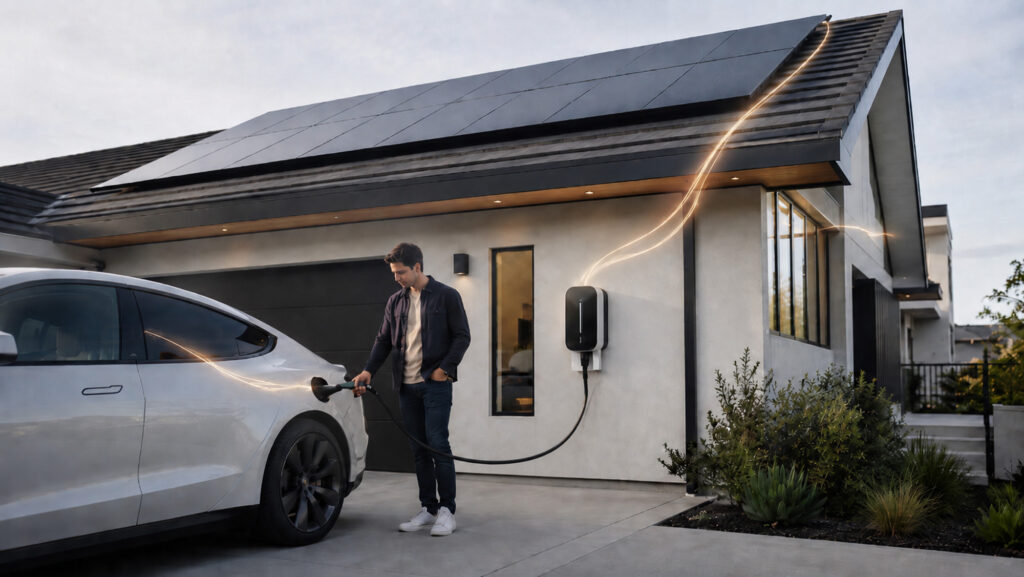
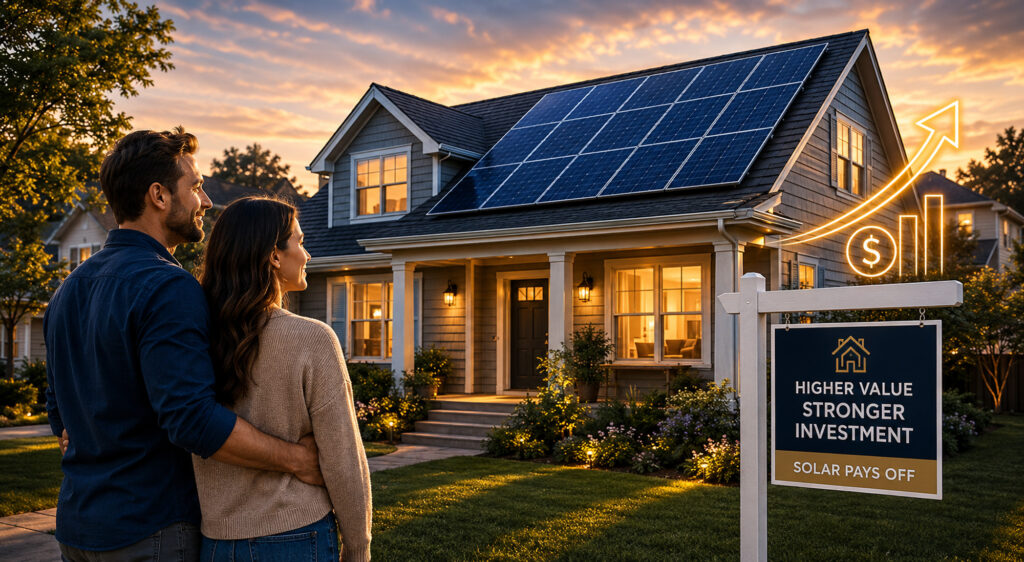
The honest answer: solar can increase home value — but only when it is owned, well-designed, and easy for the next buyer to understand.
A lot of homeowners think about solar in terms of monthly savings.
That makes sense.
Lower bill.
More control.
Less dependence on the utility.
But there is another question that matters:
What happens when I sell the home?
Will solar make the house more valuable?
Will buyers care?
Will the system help the sale — or complicate it?
The honest answer is:
Solar can add value, but not automatically.
The details matter.
Ownership matters.
System quality matters.
Battery storage matters.
Documentation matters.
And the local real estate market matters.
In 2026, solar is not just an energy upgrade.
It can be a home value story — if it is done right.
Why Solar Can Add Value to a Home
A home with solar can be more attractive because it offers something buyers understand immediately:
lower future energy costs.
That matters more in a world where utility bills keep rising.
A buyer may walk into two similar homes.
Same neighborhood.
Similar layout.
Similar finishes.
But one home has a well-designed solar system that helps reduce monthly electricity costs.
That home feels different.
It feels more future-ready.
Not because the panels are flashy.
Because the home has a built-in advantage.
What the Research Says
There is evidence that owned solar can increase home sale prices.
A Zillow analysis found that homes with solar-energy systems sold for 4.1% more on average than comparable homes without solar. For the median-valued home in that study, that translated to an added $9,274.
Lawrence Berkeley National Laboratory also found a price premium for homes with customer-owned photovoltaic systems in a large multi-state study of U.S. home sales. The Berkeley Lab research focused on owned PV systems and helped establish that solar can contribute real value in resale markets.
But here is the important part:
Those numbers are not a guarantee.
They are evidence of potential value.
Your actual outcome depends on your system, your market, and how the solar is owned.
Owned Solar vs. Leased Solar
This is the biggest distinction.
Owned solar
If you own the system, the value is simpler.
The system is part of the home.
The buyer gets the benefit.
The appraiser may be able to consider it, depending on lender and appraisal rules.
Owned systems are generally cleaner in resale because there is no third-party solar contract for the buyer to assume.
Leased solar or PPA
Leased solar and power purchase agreements can be more complicated.
The buyer may need to assume a contract.
The lender may treat the system differently.
The appraiser may not include the solar system in the same way.
Fannie Mae’s selling guide says solar panels that are leased from or owned by a third party under a power purchase agreement or similar arrangement are generally considered personal property and must not be included in the appraised value of the property.
Freddie Mac similarly says that for certain leased or PPA solar arrangements, solar panels must not be included in the appraised value of the property.
That does not mean leased solar is always bad.
It means homeowners need to understand the resale implications before choosing that structure.
Why Buyers Care About Solar
Buyers do not usually fall in love with solar because of technical specs.
They care about what it does for their life.
They want:
- lower monthly costs
- less exposure to future rate increases
- a home that feels modern
- energy resilience
- a system that is easy to understand
- clean documentation
- no surprise contracts
A solar home can feel more premium when the system is presented clearly.
But if buyers are confused by the contract, unsure who owns the panels, or worried about maintenance, that value can weaken.
That is why clarity matters.
Does Battery Storage Increase Home Value?
Battery storage is becoming a bigger part of the home value conversation.
A battery may make a home feel more resilient, especially in areas with outages, peak pricing, or grid instability.
For buyers, solar + battery can signal:
- backup capability
- smarter energy use
- reduced evening grid dependence
- more control during outages
- a more future-ready home
But battery value depends on the system design.
A battery that backs up essential loads and is clearly documented may be more attractive than a battery nobody understands.
Again, the technology matters.
But the explanation matters too.
Solar Can Help Marketability
Even when solar does not produce a perfect dollar-for-dollar appraisal boost, it can help the home stand out.
A solar home can give a listing a stronger story:
- lower utility costs
- owned energy system
- battery backup
- EV-ready potential
- sustainable home features
- modern upgrades
In competitive markets, that story matters.
Real estate is emotional.
Buyers do not only buy square footage.
They buy confidence.
A home that feels efficient, resilient, and cheaper to operate can create that confidence.
When Solar May Not Increase Value Much
Solar may add less value if:
- the system is leased or under a complicated PPA
- the system is old or poorly maintained
- the roof needs replacement soon
- production is low because of shade
- documentation is missing
- the system was oversized or poorly designed
- the buyer does not understand the benefit
- the local market does not value solar strongly
This is why solar should not be sold as a guaranteed home-value jackpot.
That would be dishonest.
Solar is a value enhancer when it is done right.
Not a magic appraisal button.
Documentation Matters More Than People Think
If you want solar to help your home value, keep the paperwork clean.
Important documents include:
- proof of system ownership
- equipment list
- panel and inverter warranties
- battery warranty if applicable
- installation contract
- permit approvals
- utility interconnection documents
- monitoring history
- production reports
- maintenance records
- roof warranty information
This matters because buyers and agents need confidence.
A clean solar file can make the system feel like an asset.
A messy solar file can make it feel like a problem.
The Appraisal Question
Solar appraisals can be inconsistent.
Some appraisers understand solar well.
Some do not.
Some lenders have clear rules around what can and cannot be included.
That is why ownership structure matters so much.
If the system is owned, there may be a stronger case for contributory value. If the system is leased or under a PPA, lender rules may restrict how that system is treated in the appraised value. Fannie Mae specifically distinguishes owned or financed systems from third-party-owned systems in its solar appraisal guidance.
The practical takeaway:
Do not assume the value will be automatic.
Prepare the documentation and understand how the system is owned.
State-by-State Considerations
Solar value can also vary by market.
California
High electricity rates can make solar more attractive to buyers, especially when paired with battery storage. But under newer net billing rules, buyers may care more about how much solar energy the system uses onsite rather than how much it exports.
Texas
In Texas, buyers may care about both savings and resilience. A solar + battery system may be especially compelling for homeowners concerned about outage risk, but buyback rules vary by provider.
Florida
In Florida, strong sunlight and high cooling demand can make solar appealing. Buyers may also care about storm resilience and whether the roof and installation meet local requirements.
New Jersey
New Jersey’s solar incentive structure and electricity costs can make owned solar attractive, especially when the seller can clearly explain remaining incentive value and system performance.
Arizona
Arizona has excellent solar production potential, but utility export rates and rate plans matter. Buyers may value systems that are designed around local utility rules and peak usage.
The Emotional Side of Home Value
This is the part spreadsheets miss.
Homeowners want to feel like they are making a responsible investment.
They want to know:
“Will this help me now?”
“Will this help me later?”
“Will a future buyer understand why this home is better?”
That is emotional.
But it is also practical.
A home that costs less to operate can feel safer.
A home with backup power can feel more prepared.
A home with clean energy can feel more aligned with the future.
Solar is not just about panels.
It is about the story your home tells.
So, Will Solar Increase Your Home Value?
Here is the clean answer:
Solar can increase home value when the system is owned, well-designed, well-documented, and meaningful in the local market.
It may add less value when the system is leased, confusing, poorly designed, or hard for buyers to understand.
The system should not only perform well.
It should be easy to explain.
That is what turns solar from equipment into an asset.
Sabio Takeaway
Solar can make your home more valuable.
But the value is not just in the panels.
It is in:
- ownership
- design
- savings
- resilience
- documentation
- buyer confidence
A smarter solar system does two things:
It helps your home today.
And it makes your home easier to believe in tomorrow.
Ready to Design Solar With Long-Term Value in Mind?
We’ll help you understand whether solar-only, solar + battery, or another energy strategy makes sense for your home.