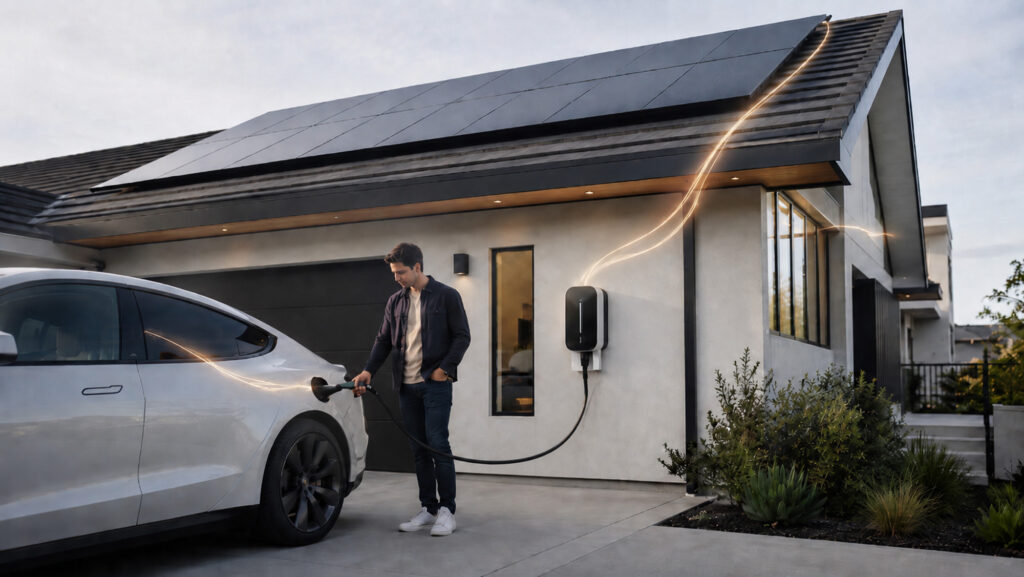

Solar is local now. Your state matters. Your utility matters even more.
Residential solar by state
Residential solar used to feel like one simple national story.
Install panels.
Use the federal tax credit.
Lower your bill.
In 2026, that story is different.
The old federal Residential Clean Energy Credit is no longer available for residential clean energy property placed in service after December 31, 2025, according to the IRS. That means homeowners now need to pay closer attention to state rules, utility programs, battery value, and local electricity rates.
Solar can still make sense.
But the smartest solar decision in California may look very different from the smartest solar decision in Texas, Florida, New Jersey, or Arizona.
That is why we built this guide.
Not to overwhelm you.
To help you understand what matters where you live.
Why State Rules Matter More in 2026
Solar is not just about sunlight.
It is about the full energy system around your home.
Your savings can depend on:
- your electric rate
- your utility provider
- net metering or net billing rules
- solar buyback programs
- battery incentives
- local permitting
- roof condition
- how much energy you use during the day vs. evening
The same solar system can perform differently in two states — or even two utility territories in the same state.
That is why a generic quote is not enough anymore.
The right solar system has to be designed around your actual location.
California Residential Solar
California is now a solar + battery market.
California remains one of the most important solar markets in the country, but the strategy has changed.
New solar customers are generally under California’s Net Billing Tariff, while older NEM tariffs are closed to new enrollments. The California Public Utilities Commission explains that the Net Billing Tariff replaced NEM 2.0 for customers whose interconnection applications were submitted on or after April 15, 2023.
That matters because exported solar energy is valued differently than it was under older net metering rules.
In plain English:
Sending extra power back to the grid may not be as valuable as using that power yourself.
That is why batteries often matter more in California now.
A battery can help you:
- store daytime solar
- use it in the evening
- reduce peak-rate exposure
- depend less on export credits
- keep essentials powered during outages
California homeowner takeaway
If you live in California, do not just ask:
“How many panels do I need?”
Ask:
“How much of my own solar power can I actually use?”
That is where smart system design starts.
Best fit for California
California solar may be a strong fit if:
- your bill is high
- you have time-of-use pricing
- your roof gets strong sun
- you want battery backup
- you plan to stay in your home
- you want more control over rising rates
CTA
Explore California Residential Solar
Texas Residential Solar
Texas is about savings, but also resilience.
Texas is different.
There is no one-size-fits-all statewide solar rule that works the same for every homeowner. The value of solar can depend heavily on your retail electric provider, local utility, municipal utility, or co-op. DSIRE tracks Texas solar and renewable programs across utilities and providers.
That makes Texas a market where homeowners need to look closely at:
- buyback rates
- electricity provider terms
- outage concerns
- battery backup value
- summer cooling demand
- long-term rate exposure
Some Texas homeowners are mainly focused on lowering bills.
Others are focused on keeping power during grid instability.
Both are valid.
Texas homeowner takeaway
In Texas, solar is not just a panel decision.
It is a plan decision.
Who buys back your power?
At what rate?
What happens during an outage?
Does a battery make sense?
These questions matter.
Best fit for Texas
Texas solar may be a strong fit if:
- your summer bills are high
- your provider offers a good buyback plan
- you want battery backup
- your roof has strong sun exposure
- you are concerned about grid reliability
- you want more predictable energy costs
CTA
Explore Texas Residential Solar
Florida Residential Solar
Florida has the sun. The question is how your home uses it.
Florida is a natural solar market because of strong sunlight and heavy cooling demand.
A lot of Florida homeowners use significant electricity for air conditioning, especially during hot months. That can make solar attractive when the system is designed around real usage.
Florida also has statewide net metering rules for customer-owned renewable systems, and DSIRE tracks Florida’s net metering program details.
But Florida solar should still be designed carefully.
Why?
Because homeowners need to think about:
- roof condition
- hurricane-rated installation standards
- insurance considerations
- utility rules
- battery backup during storms
- long-term cooling costs
Florida homeowner takeaway
Florida solar is not just about producing power.
It is about building a home that can handle heat, storms, and rising energy demand more intelligently.
Best fit for Florida
Florida solar may be a strong fit if:
- your AC drives high bills
- your roof gets strong sun
- your roof is in good condition
- you want backup power during storms
- you plan to stay in the home
- you want to reduce long-term utility dependence
CTA
Explore Florida Residential Solar
New Jersey Residential Solar
New Jersey is still one of the strongest solar incentive markets.
New Jersey is not the sunniest state on this list.
But solar is not only about sunshine.
It is also about policy.
New Jersey continues to support solar through its Successor Solar Incentive structure. The state’s ADI Program provides incentives through SREC-IIs, and the New Jersey Clean Energy Program explains that ADI registrations are accepted on a first-come, first-served basis until the relevant block is full or until the applicable deadline.
That can make New Jersey a strong residential solar market even without being Arizona or Florida.
The value comes from a combination of:
- electricity rates
- state incentive structure
- net metering
- system ownership
- long-term home value
- local utility rules
New Jersey homeowner takeaway
In New Jersey, solar is a policy-and-savings story.
The sun matters.
But the incentive structure matters too.
Best fit for New Jersey
New Jersey solar may be a strong fit if:
- your electric bill is high
- you want long-term savings
- your roof gets decent sun
- you want to benefit from state solar programs
- you own your home
- you plan to stay several years
CTA
Explore New Jersey Residential Solar
Arizona Residential Solar
Arizona has the sun. The utility rules decide the strategy.
Arizona has some of the best solar production potential in the country.
But strong sunlight alone does not guarantee the best financial outcome.
Homeowners still need to understand utility-specific export rates, rate plans, and battery value. DSIRE tracks Arizona distributed generation and export compensation policies across major utilities.
That means Arizona solar should be designed around:
- high sun exposure
- summer cooling demand
- export compensation
- time-of-use pricing
- battery storage
- utility territory
Arizona homeowner takeaway
Arizona gives you the raw solar resource.
Your utility determines how valuable that energy becomes.
That is why system design matters.
Best fit for Arizona
Arizona solar may be a strong fit if:
- your roof has strong sun exposure
- your summer bills are high
- your utility rate plan rewards smart usage
- you want battery backup
- you want to reduce peak-hour electricity costs
- you plan to stay in the home
CTA
Explore Arizona Residential Solar
Quick State Comparison
California
Best for homeowners who want solar + battery, rate protection, and more control under net billing rules.
Texas
Best for homeowners who want bill reduction, outage resilience, and a carefully selected buyback plan.
Florida
Best for homeowners with strong sun, high cooling demand, and interest in storm-season resilience.
New Jersey
Best for homeowners who want long-term savings supported by a strong state solar incentive structure.
Arizona
Best for homeowners with high sun exposure who need a utility-specific solar and battery strategy.
The Sabio Way: State First, Home Second, System Third
Most solar companies start with the system.
We think that is backwards.
A smarter process starts with:
1. Your state
What rules and incentives apply?
2. Your utility
How are you charged?
How are exports credited?
3. Your bill
How much power do you actually use?
4. Your home
How much usable roof space and sunlight do you have?
5. Your goals
Are you trying to lower bills, add backup, prepare for an EV, or build a smarter home?
That is how residential solar should be designed in 2026.
Not by guessing.
By understanding the system around you.
Which State Are You In?
Choose your state to learn how residential solar works where you live:
- California Residential Solar
- Texas Residential Solar
- Florida Residential Solar
- New Jersey Residential Solar
- Pennsylvania Residential Solar
- Arizona Residential Solar